Wind Vectors and Gust Calculations Affecting Tennis Serve Rates on Open Courts
Written by Zoe Schröder · Aug 8, 2026
Wind Vectors and Gust Calculations Affecting Tennis Serve Rates on Open Courts
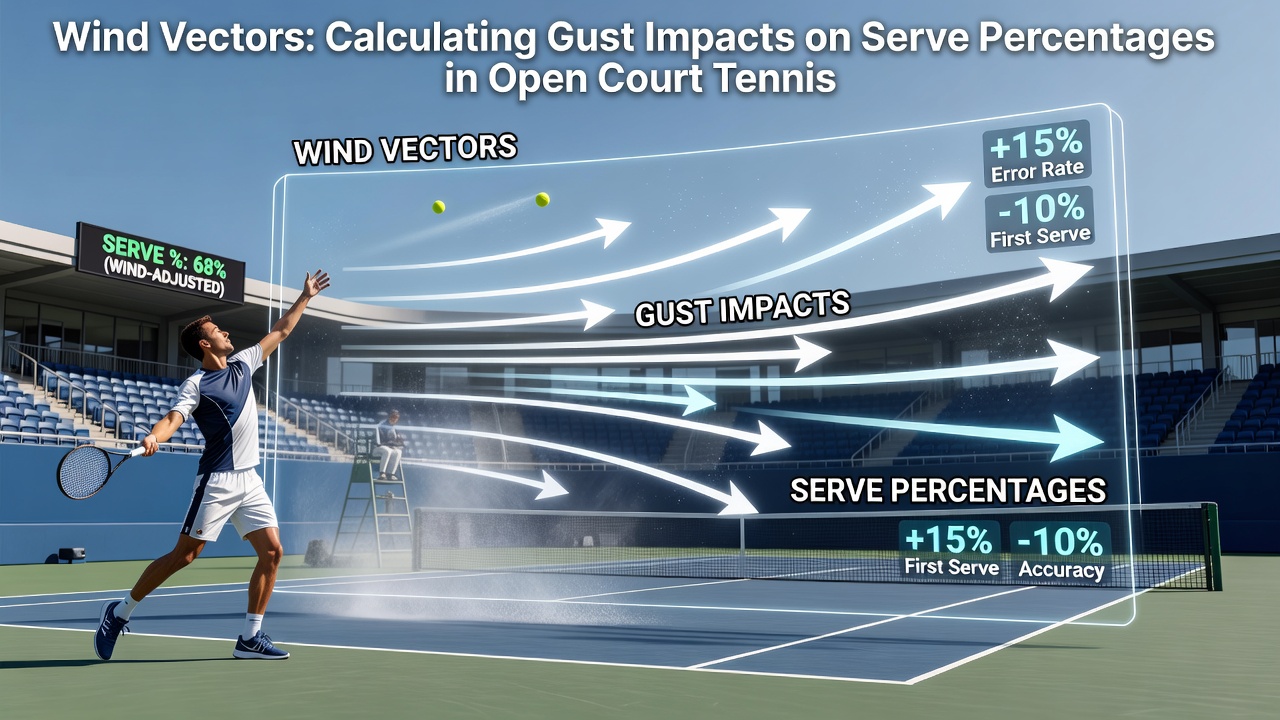
Wind vectors represent directional force components that combine speed and angle to alter ball flight paths in outdoor tennis matches, and researchers track these patterns to quantify shifts in serve success rates across exposed venues. Data from meteorological stations paired with match statistics show that gusts exceeding 20 kilometers per hour often reduce first-serve percentages by measurable margins while tailwinds can extend ball travel distances and change bounce behavior on hard or grass surfaces. Observers note that crosswinds introduce lateral deviations which force servers to adjust toss heights and racket angles, leading to documented drops in accuracy during prolonged rallies or tiebreaks.
Vector Components in Ball Trajectory
Wind vectors break down into headwind, tailwind, and crosswind elements, each exerting distinct forces on the tennis ball as it travels from racket to service box. Headwinds increase drag and shorten flight time, which studies from sports science labs indicate can lower serve speeds by up to 8 percent when sustained gusts reach 25 kilometers per hour. Tailwinds reduce drag yet add unpredictable lift that sometimes pushes balls long, and crosswinds create side spin effects that servers must counter with topspin adjustments or altered stance positions. Those who analyze match footage from multiple Grand Slam events observe that players adapt toss placements forward or backward depending on vector strength, which in turn influences the resulting serve percentage outcomes recorded in official statistics.
Gust Patterns During Peak Tournament Periods
August 2026 schedules for outdoor events in regions with variable summer winds highlight how gust frequency rises in afternoon sessions when thermal heating intensifies vector variability. Tournament data collected at facilities with minimal wind barriers reveal that gust intervals shorter than 10 seconds correlate with sharper declines in second-serve points won, because returners gain extra reaction time while servers face inconsistent ball response. Experts at meteorological agencies such as NOAA supply real-time vector forecasts that coaching teams integrate into pre-match preparation, allowing adjustments to target zones within the service box and racket swing paths. These preparations produce measurable differences in serve percentages when compared against matches played under calmer conditions earlier in the same week.
Calculation Methods for Impact Assessment
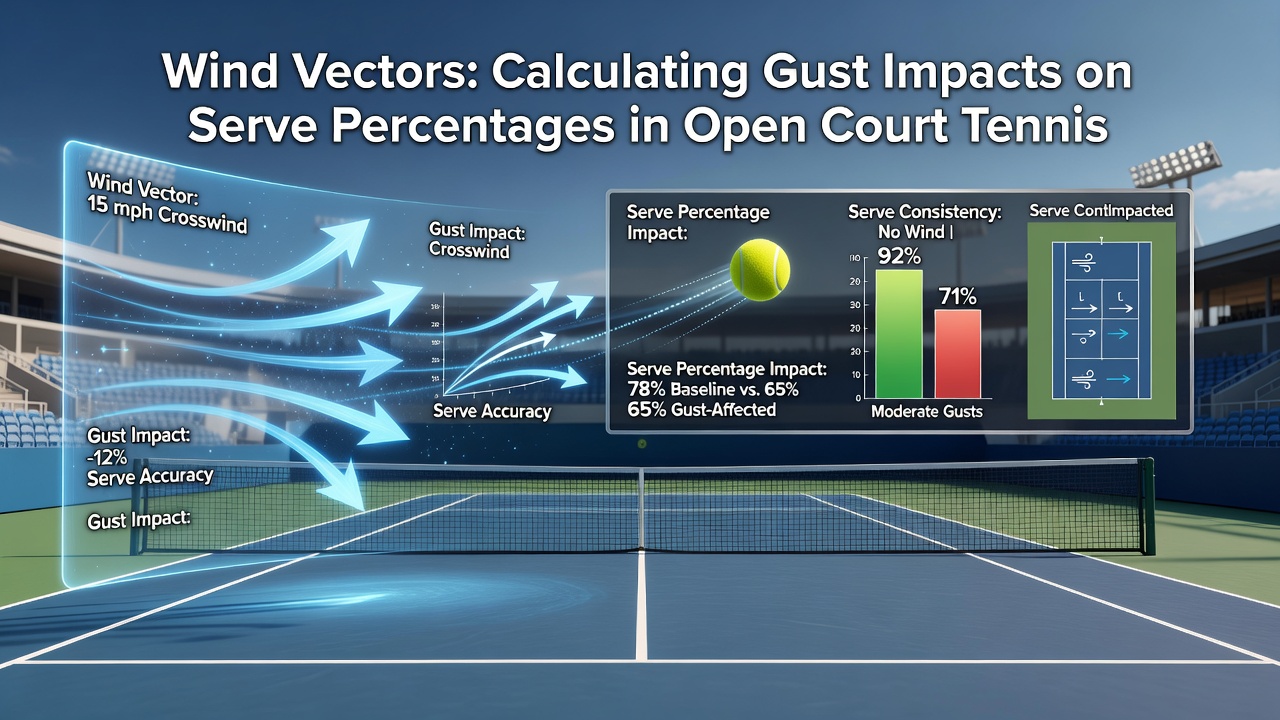
Analysts apply vector mathematics to decompose gust data into x and y components relative to court orientation, then feed those values into trajectory models that simulate ball spin decay and landing coordinates. Equations incorporating drag coefficients and lift forces derived from wind tunnel tests demonstrate that a 15-degree crosswind angle combined with 18 kilometer per hour speed shifts the ball's landing point by an average of 25 centimeters, enough to push marginal serves outside service lines. Research institutions track these shifts across hundreds of matches and report consistent patterns where first-serve percentages fall between 4 and 12 points under moderate gust conditions, while ace rates fluctuate based on player height and serve style preferences. Players who modify their motion to add extra topspin counteract some lateral movement, yet this adjustment often reduces overall power and alters the distribution of points won on serve.
Comparative Effects Across Court Surfaces
Grass courts allow faster ball travel and lower bounces, so wind vectors produce more pronounced horizontal deviations that directly affect serve percentages in ways distinct from clay surfaces where slower speeds grant extra adjustment time. Data collected during European summer events show that headwinds on grass reduce ace frequency more sharply than on clay because the ball decelerates faster upon landing, while crosswinds on hard courts create unpredictable skids that challenge both servers and returners. Those who compile statistics from multiple surfaces note that open-court venues without surrounding stands experience amplified gust effects compared with stadium configurations that provide partial shielding, leading to greater variability in recorded serve outcomes during windy periods.
Player Adaptation Strategies Observed in Matches
Servers respond to shifting vectors by altering toss timing and racket face angles, and performance records indicate these changes stabilize serve percentages when executed consistently. Taller players with high ball tosses encounter greater exposure to upper-level gusts, whereas shorter players who toss lower benefit from reduced vector influence but sacrifice some reach and power. Match analysis from recent outdoor tournaments reveals that second-serve percentages improve when players incorporate slice serves into their patterns during strong crosswind conditions, because the sidespin interacts with lateral forces to keep balls within the box more reliably than flat serves. Coaching staff monitor live wind readings from on-site sensors and relay adjustments that help maintain competitive serve statistics despite changing environmental factors.
Conclusion
Wind vector calculations provide a structured framework for understanding gust impacts on serve percentages in open-court tennis, and integration of meteorological data with match statistics continues to refine predictive models used across professional events. Continued collection of vector measurements alongside performance records supports more precise adjustments during tournament play, particularly in August 2026 when multiple outdoor fixtures coincide with seasonal wind variability. These analytical approaches deliver objective insights into how directional forces shape outcomes without relying on subjective assessments of player form or venue conditions.