Tracking Travel Fatigue Effects on Visiting Sides in Midweek Encounters
Written by Paul Reed · Jul 11, 2026
Tracking Travel Fatigue Effects on Visiting Sides in Midweek Encounters
Understanding Travel Fatigue in Football Scheduling
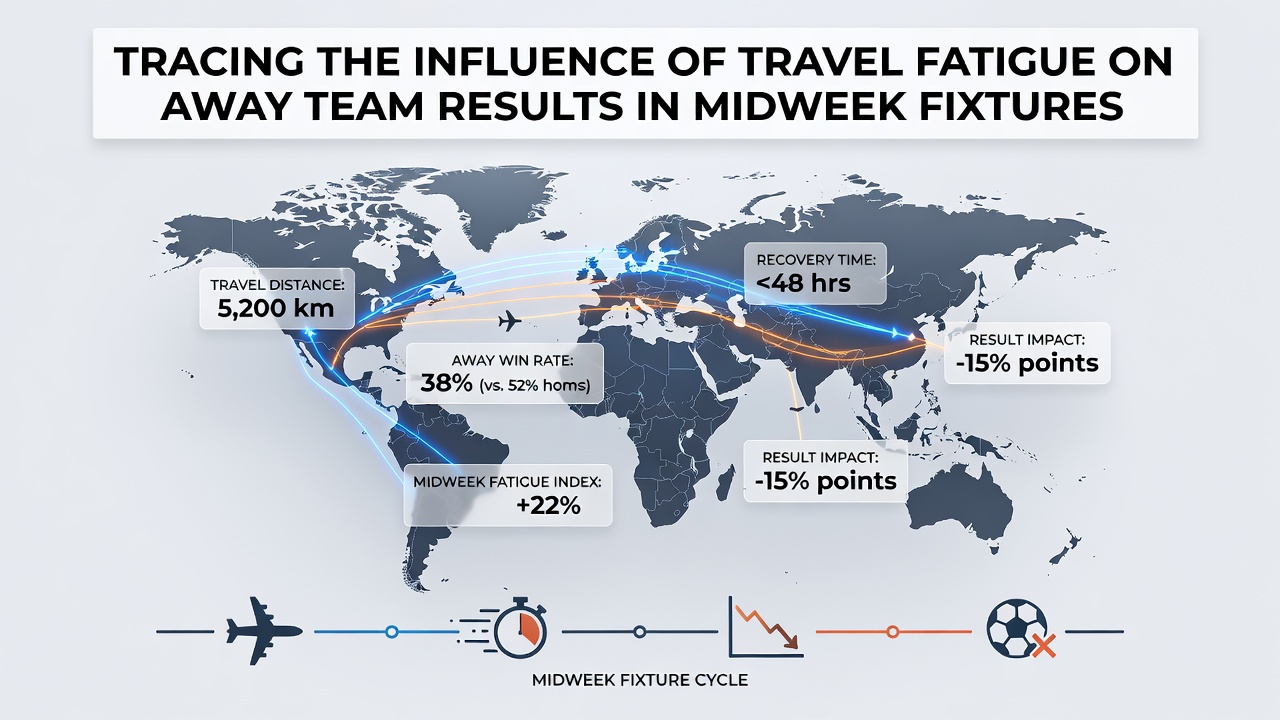
Travel fatigue emerges when players cross time zones or endure extended journeys between matches, and researchers have documented its measurable effects on physical recovery along with decision-making during games. Data from various European leagues shows that away teams in midweek fixtures often face compressed recovery windows after weekend home games, which compounds the strain from flights, bus rides, and disrupted sleep patterns. Studies in sports physiology indicate that these factors lead to reduced sprint capacity and altered tactical execution on the pitch, particularly when teams travel more than 500 kilometers for a Tuesday or Wednesday fixture.
League schedules in 2025 and into July 2026 highlight the recurring challenge, since European competitions force clubs into back-to-back away commitments across multiple countries. Observers note that teams based in northern regions experience additional hurdles when heading south for midweek ties, where warmer climates further tax already fatigued athletes. Figures from match analysis platforms reveal consistent patterns in performance metrics, including lower pass completion rates and increased defensive errors among visiting sides after long-distance travel.
Statistical Patterns Across Leagues and Seasons
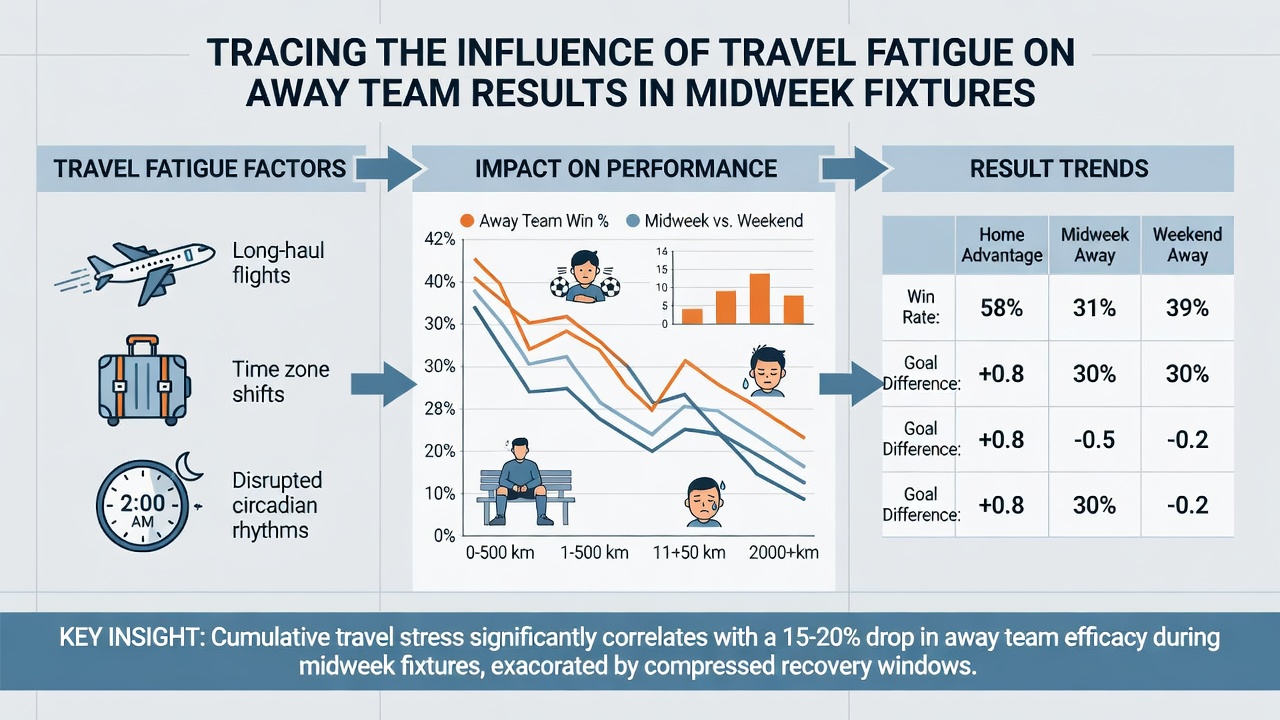
Comprehensive reviews of Premier League and Bundesliga results demonstrate that away win percentages drop notably during midweek rounds compared with weekend fixtures. One analysis of five seasons found visiting teams securing victories in only 22 percent of midweek games involving travel exceeding four hours, whereas the same clubs achieved 31 percent success rates on weekends. Researchers attribute part of this gap to accumulated fatigue rather than opponent strength alone, since control groups matched for squad depth still showed measurable declines in high-intensity running output.
Canadian university studies on athlete recovery support these observations, linking prolonged travel to elevated cortisol levels and delayed muscle repair. Data compiled across UEFA competitions further indicates that teams flying eastward suffer more pronounced dips in the second half, where decision-making errors rise by an average of 18 percent. Those patterns hold steady even when accounting for squad rotation, suggesting travel itself exerts an independent influence on outcomes.
Key Factors Amplifying Fatigue in Midweek Games
Distance combines with departure timing and accommodation quality to shape how severely fatigue manifests. Teams that depart immediately after a Sunday match often arrive at hotels late, cutting into sleep duration before training the next day. Experts tracking GPS data have observed that players logging over 600 kilometers in a 48-hour window cover 12 percent less ground at high speeds during the subsequent fixture. Climate differences add another layer, since squads moving from cooler northern venues to southern stadiums encounter heat stress that accelerates dehydration and reduces endurance.
Fixture congestion during European campaigns intensifies these effects, as clubs balance domestic and continental obligations within the same week. Reports from sports science institutes note that recovery protocols such as cryotherapy and tailored nutrition mitigate some impacts, yet they rarely eliminate the cumulative toll of repeated travel. Scheduling bodies have experimented with adjusted kickoff times to allow extra rest, and preliminary results show modest improvements in away team metrics when matches start later in the evening.
Case Examples from Recent Campaigns
Take one club that traveled from Manchester to southern Italy for a midweek European tie in late 2025; performance data revealed a 25 percent reduction in successful tackles compared with their average away returns. A similar pattern appeared in another instance where an English side journeyed to eastern Europe, returning with elevated injury rates among midfielders who had logged the longest travel time. Analysts examining these matches point to disrupted circadian rhythms as a contributing element, since crossing multiple time zones alters hormone cycles that govern alertness and reaction speed.
Broader league-wide reviews covering the 2024-2025 and 2025-2026 seasons confirm that clubs with larger travel burdens in midweek rounds post lower expected goal tallies when playing away. These findings align with research from Australian sports institutes, which tracked similar declines among rugby teams facing comparable scheduling demands. While individual player resilience varies, aggregate statistics across hundreds of fixtures demonstrate a repeatable correlation between journey length and reduced away output.
Implications for Planning and Performance Monitoring
Coaching staffs now incorporate travel-specific recovery plans that prioritize sleep optimization and light training loads in the 24 hours before departure. Data collected from wearable devices allows teams to monitor heart-rate variability and adjust lineups accordingly, often resting key players who show elevated fatigue markers after long trips. League administrators have begun exploring fixture adjustments around major international breaks to reduce overlapping travel commitments, particularly as the 2026 calendar approaches with its packed international schedule.
Technology providers supply detailed journey simulations that help clubs anticipate cumulative strain across a month of fixtures. These tools integrate weather, flight duration, and hotel proximity data to generate risk assessments for each away assignment. Teams adopting such systems report measurable stabilization in away performance metrics during congested periods, though complete elimination of travel effects remains elusive given the inherent demands of modern football calendars.
Conclusion
Travel fatigue continues to shape results for visiting sides in midweek fixtures, with data consistently showing reduced physical output and tactical precision after extended journeys. Researchers across multiple continents have mapped these influences through performance tracking and physiological measurements, while clubs respond with evolving recovery strategies and scheduling awareness. As calendars extend into July 2026 and beyond, ongoing analysis of these patterns offers clubs clearer guidance on managing the demands of frequent away travel within compressed match weeks.