Tennis Surface Transitions: Uncovering Betting Value in Multi-Match Scenarios
Written by Zoe Schröder · Jul 23, 2026
Tennis Surface Transitions: Uncovering Betting Value in Multi-Match Scenarios
Professional tennis schedules place competitors on varied court surfaces within short timeframes, and these shifts generate measurable performance variations that influence outcomes across consecutive matches in a single event. Data from major tours shows players adapt at different rates depending on prior surface exposure, which creates identifiable edges when assessing wagers on multiple fixtures.
Court Surface Categories and Typical Transition Patterns
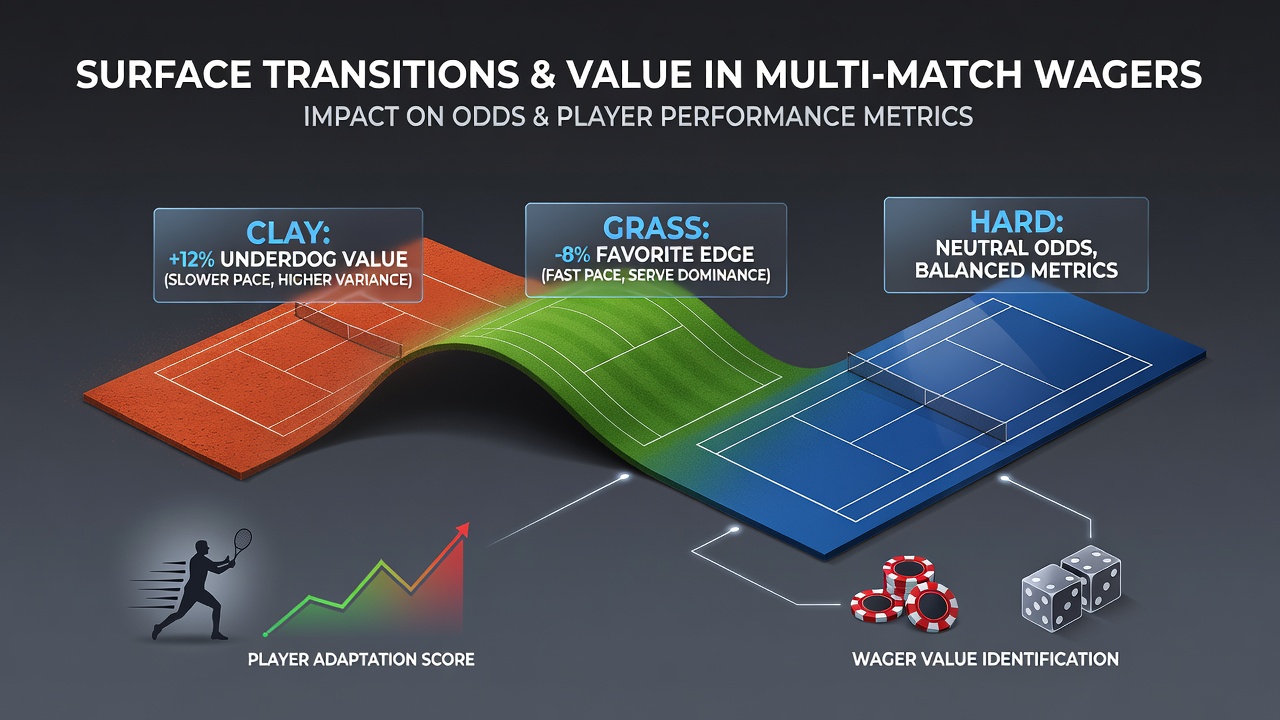
Grass courts favor shorter points with lower bounce while clay extends rallies through higher, slower ball response, and hard courts occupy a middle range with consistent speed. Tournaments in July 2026 often feature rapid moves from grass events like those concluding in early July to hard-court swing tournaments across North America and Asia. Observers note that athletes who compete on grass one week may face hard courts the next, producing adaptation periods where serve percentages and baseline consistency fluctuate noticeably in opening rounds.
Researchers tracking ATP and WTA data have documented that certain players maintain higher first-serve win rates immediately after grass-to-hard transitions, whereas others show temporary drops in return points won during the same window. These patterns emerge because footwork adjustments and ball-strike timing require specific practice volumes that schedules do not always allow.
Performance Metrics Altered by Surface Changes
Break-point conversion rates frequently decline for players moving from slower to faster surfaces because timing windows narrow and error margins shrink. Conversely, those shifting from hard to clay often improve their ability to construct longer points, which elevates games-per-set averages in multi-match formats. Figures from recent seasons indicate that average match duration increases by 12 to 18 minutes during clay transitions compared with grass-to-hard sequences.
Statistics compiled by the International Tennis Federation reveal that unforced error counts rise sharply in the first two matches after a surface change, then stabilize as players accumulate court time. This stabilization window directly affects value calculations when bettors evaluate full tournament paths rather than single encounters.
Identifying Value Across Consecutive Matches
Multi-match wagers require assessment of cumulative fatigue alongside surface adaptation curves. Bettors who examine historical head-to-head results on each surface separately, rather than aggregated career numbers, locate discrepancies where implied probabilities diverge from observed outcomes. One study of 2025 grass-to-hard sequences demonstrated that favorites with strong clay backgrounds underperformed their expected win rates in early hard-court rounds by margins sufficient to shift accumulator payouts.

Those analyzing draw structures now incorporate surface-specific Elo adjustments that account for recent match counts on each surface. This approach highlights instances where a player scheduled for three consecutive matches may deliver peak output only in the second or third fixture once adaptation completes. Data from European hard-court events in 2026 showed several mid-ranked competitors exceeding projected totals in later rounds after initial adjustment matches.
Practical Application in 2026 Tournament Settings
Events following the grass-court season frequently schedule qualifying rounds on the new surface before main-draw action begins, which supplies additional data points for surface-specific form assessment. Analysts reviewing these qualifiers have identified clusters of matches where underdogs secured sets through superior movement on the unfamiliar court, altering outright and handicap markets for subsequent rounds.
Industry reports from Tennis Australia and similar bodies tracking global tours note that scheduling density in July increases the frequency of surface transitions for players competing in both European and North American swings. This density amplifies the importance of reviewing practice-session reports adn recent surface exposure when constructing multi-match selections.
Conclusion
Surface transitions produce predictable shifts in key performance indicators that extend across multiple matches in a tournament setting. Comprehensive review of surface-specific statistics, combined with attention to adaptation timelines, supplies factual inputs for evaluating value in wagers spanning several rounds. Continued collection of granular data from tours worldwide supports refined models that isolate these effects from other variables such as ranking differentials and rest intervals.