Tennis Recovery Dynamics: How Interval Days Between Matches Reshape Betting Odds
Written by Jakob Butler · Aug 18, 2026
Tennis Recovery Dynamics: How Interval Days Between Matches Reshape Betting Odds
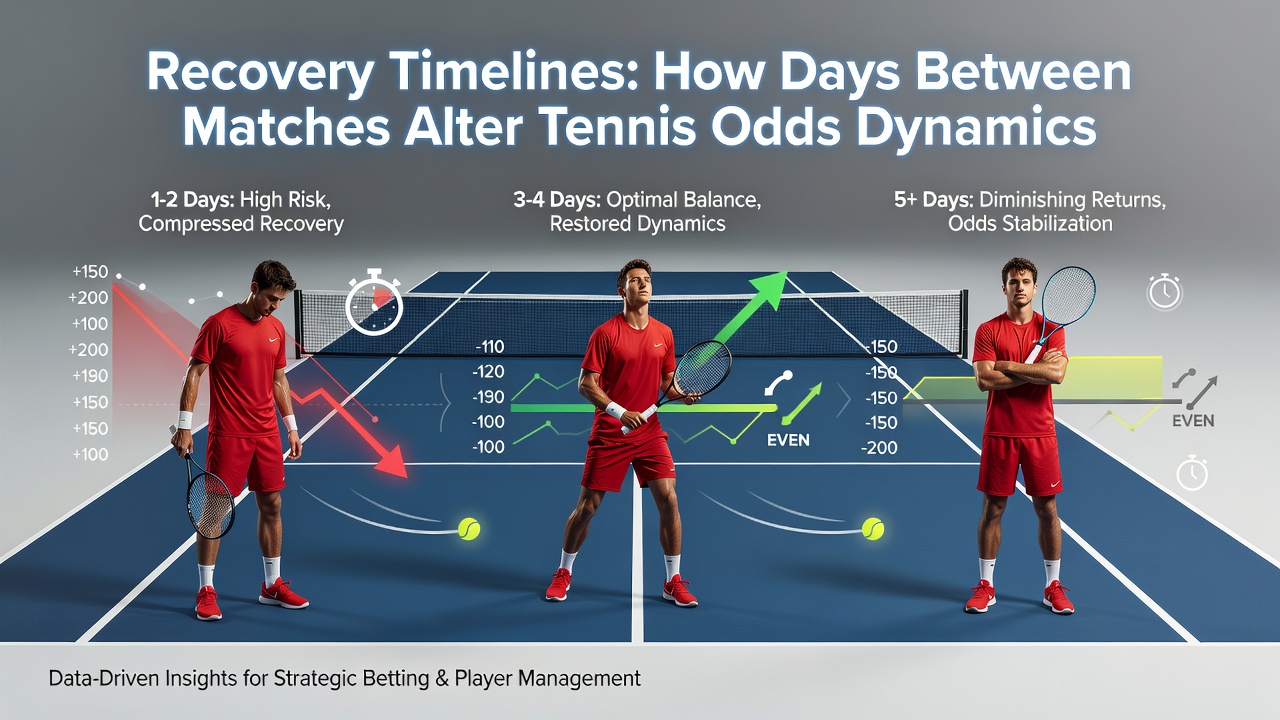
Recovery timelines play a central role in tennis performance, and betting markets adjust odds accordingly when players face varying rest periods between matches. Tournament schedules often compress or stretch these intervals, which influences physical readiness, error rates, and overall win probabilities that oddsmakers track closely.
Data collected from major circuits shows that players with fewer than 24 hours between matches exhibit measurable declines in serve accuracy and movement speed, patterns that betting platforms incorporate into pre-match lines. Observers note these shifts become especially pronounced during summer hard-court swings where back-to-back sessions are common.
Physical Effects of Short Recovery Windows
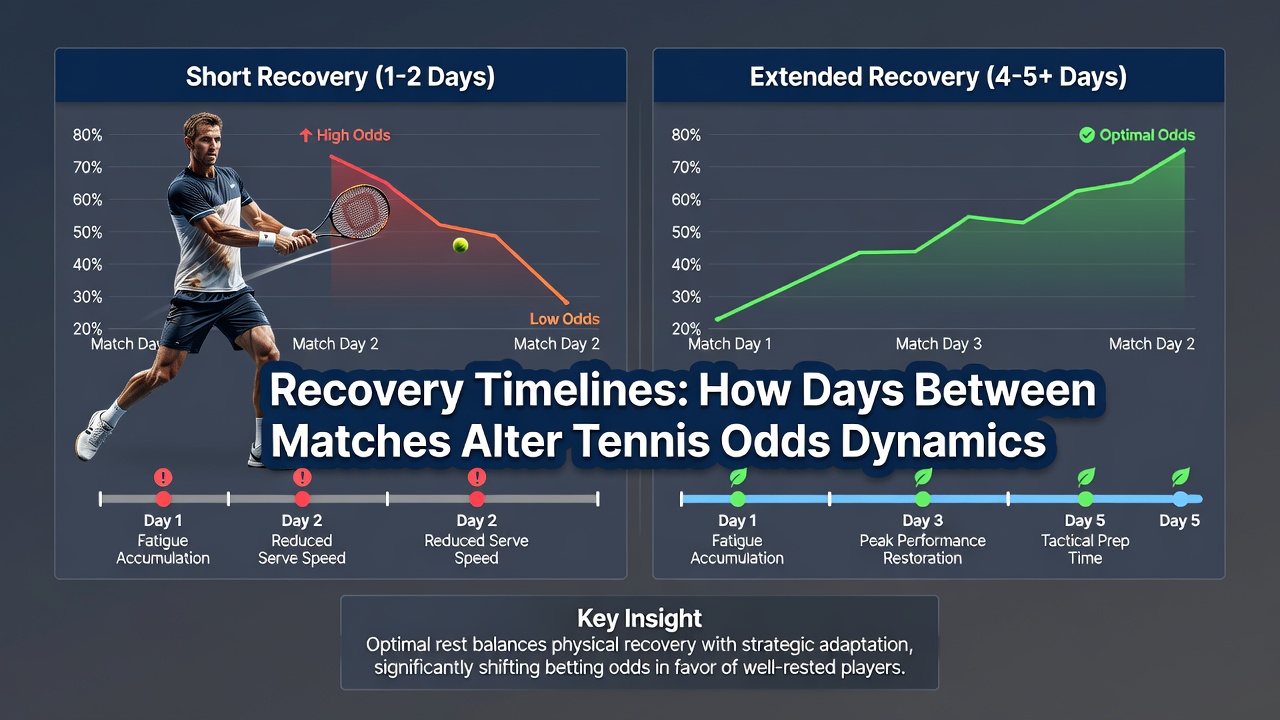
Studies from sports science groups indicate that muscle glycogen replenishment and joint inflammation reduction require at least 48 hours for optimal restoration in elite athletes. When schedules allow only one night between contests, players demonstrate elevated fatigue markers that correlate with higher unforced error counts in later sets. Australian research teams tracking heart-rate variability during events have documented consistent drops in second-serve percentage after abbreviated rest, data that feeds directly into odds calculations.
Match length adds another layer, because five-set encounters on slower surfaces extend physical demands and leave competitors with even less time to recover before the next round. Betting operators monitor these variables through historical databases that compare outcomes across different rest intervals, producing line movements when public money flows toward fresher players.
Odds Adjustments Across Tournament Stages
Early-round matches often feature larger rest gaps, yet quarterfinal and semifinal slots compress timelines dramatically during two-week events. Figures from professional tours reveal that favorites with two full days between matches win at higher rates than those returning after a single day, prompting oddsmakers to tighten spreads or shift moneylines by several percentage points. This adjustment process accelerates in August 2026 when multiple North American hard-court tournaments overlap, creating scheduling bottlenecks for players advancing deep in both events.
Market makers at international sportsbooks reference injury reports alongside rest data to refine totals and player props, because prolonged rallies become less likely under fatigue. Those who follow line history observe that over/under totals on total games frequently drop when one participant enters with limited recovery time compared to an opponent coming off a bye or longer layoff.
Data Patterns from Recent Seasons
Performance analytics firms compile granular datasets that link rest days to win percentages across surfaces and genders. One review of ATP and WTA matches between 2022 and 2025 found a 6 to 9 percent swing in expected win probability when rest differentials reached 48 hours or more, numbers that propagate through algorithmic pricing models. European betting exchanges publish aggregated trade volumes showing heavier action on rested players during mid-tournament stages where fatigue accumulates fastest.
Weather conditions compound these effects because high temperatures accelerate dehydration and extend physical strain, factors that statistical models weigh when setting live odds. Researchers tracking serve speed metrics across multiple events have confirmed that velocity declines appear earlier in matches following short recovery periods, prompting real-time adjustments visible on betting platforms.
Scheduling Influences on Market Behavior
Grand Slam calendars and smaller tour events create distinct recovery profiles that bettors and operators alike monitor. Day sessions followed by evening matches within 24 hours generate measurable performance gaps that translate into odds volatility, particularly in doubles where team coordination suffers under fatigue. Canadian regulatory filings on sports wagering volumes highlight increased handle during periods when rest differentials create clear favorites, though overall market liquidity remains stable across regions.
Coaching staffs now incorporate recovery protocols such as cryotherapy and targeted nutrition that partially mitigate these effects, yet data still shows residual impacts on movement and decision-making late in matches. Betting syndicates incorporate these updated protocols into proprietary models that refine projected margins based on documented rest intervals.
Conclusion
Recovery timelines between tennis matches continue to drive measurable shifts in performance metrics and betting odds across professional circuits. Tournament organizers, data providers, and market operators all reference the same underlying patterns of physical restoration to set and adjust lines, creating a feedback loop where rest differentials remain a core pricing variable. As schedules evolve through 2026 and beyond, these dynamics will persist as a central element in how odds reflect real-world conditions on court.