Synchronizing Course Layouts with Speed Ratings for Optimizing National Hunt Selections
Written by Paul Reed · Aug 27, 2026

Synchronizing Course Layouts with Speed Ratings for Optimizing National Hunt Selections
National Hunt racing relies on precise adjustments between track configurations and velocity metrics because each venue presents unique challenges that alter raw times. Researchers have documented how fence spacing, gradient changes, and ground conditions modify the speed figures that selectors use to rank contenders. Data from multiple seasons shows that ignoring these variables leads to misaligned ratings while synchronization produces selections that align more closely with actual performance outcomes.
Course layouts in jumps events feature varying numbers of obstacles, different turn radii, and uphill or downhill sections that affect stride patterns. Observers note that tracks like Cheltenham demand adjustments for their testing uphill finish whereas venues such as Aintree require recalibration around the long straights and wide bends. Speed ratings start from recorded times yet experts adjust those figures by applying course-specific multipliers derived from historical race data. This process accounts for the fact that a horse running 60 seconds over three miles at one track may equate to a different rating at another because the layout changes energy expenditure.
Core Components of Course-Specific Adjustments
Analysts break the synchronization into several measurable elements. First they catalog fence types and placements because stiff obstacles slow overall times compared with more forgiving ones. Second they measure elevation profiles since uphill sections reduce speed by measurable percentages according to biomechanical studies. Third they incorporate going reports that quantify surface moisture and its impact on footing. These elements combine into a single adjustment factor applied to each horse's speed rating before comparisons across meetings occur.
Studies from equine performance laboratories indicate that gradient alone can alter times by up to eight percent on certain tracks. When selectors apply these calibrated figures the resulting rankings reflect true ability rather than track artifacts. One study revealed that horses carrying identical ratings but racing on dissimilar layouts produced win rates that diverged by more than fifteen percentage points until adjustments were introduced.
Practical Application in Selection Processes
Selectors begin by collecting raw speed figures from past performances then cross-reference each horse's record against the target course profile. They calculate an adjusted rating by adding or subtracting the venue multiplier. For example a horse with a 140 rating at a flat, galloping track might receive a 135 adjusted figure when entered at a tight, undulating venue. This recalibrated number then feeds into broader selection models that also consider recent form, weight carried, and distance suitability.
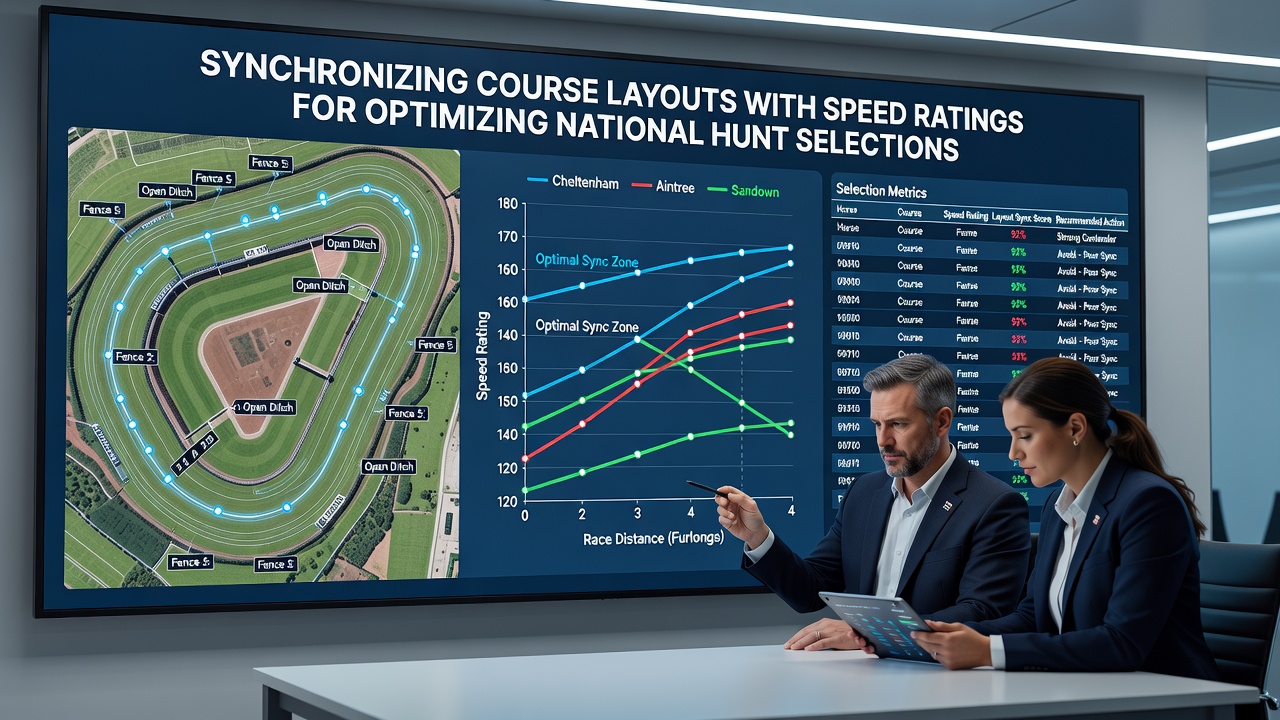
During the transition period leading into the 2026-27 jumps season, data accumulated through August 2026 highlighted how early autumn ground conditions amplified the need for accurate synchronization. Tracks that opened with softer surfaces required larger downward adjustments because horses expended extra energy negotiating the terrain. Those who incorporated these seasonal variables into their models recorded improved strike rates compared with selectors relying on unadjusted figures.
Data Sources Supporting Synchronization Methods
Industry reports compiled by the British Horseracing Authority demonstrate consistent patterns across hundreds of races where layout-adjusted ratings outperformed raw times. Similar findings appear in analyses from the Irish Horseracing Regulatory Board, which tracks performance metrics across its network of jumps venues. Academic papers on equine locomotion further validate the approach by quantifying how stride frequency changes with obstacle frequency and elevation gain.
Additional verification comes from international comparisons. Researchers examining Australian jumps racing found parallel results when they synchronized local track layouts with speed data, confirming that the principle operates beyond any single jurisdiction. These cross-regional studies strengthen the case for standardized adjustment protocols that selectors can apply regardless of location.
Implementation Challenges and Solutions
Accurate synchronization demands comprehensive databases that store both layout measurements and historical times for every course. Maintaining these records requires ongoing updates whenever tracks undergo renovation or drainage improvements. Some organizations address this by deploying GPS tracking on runners to gather real-time stride and speed data that refines the multipliers annually. Others rely on manual surveys supplemented by video analysis of sectional times.
Despite the technical demands, the method scales across different race distances and classes. Handicappers who apply synchronized ratings report fewer outliers where a horse's performance deviates sharply from expectations. The approach also integrates smoothly with existing software tools that automate the calculation once the course profile is entered.
Conclusion
Synchronizing course layouts with speed ratings supplies selectors with a structured framework that reduces noise from venue-specific variables. Evidence from regulatory bodies, academic research, and performance databases shows that adjusted figures produce rankings that more accurately predict outcomes in National Hunt events. As data collection methods advance through GPS and sectional timing, the precision of these adjustments continues to improve, offering selectors a reliable foundation for decision making across the jumps calendar.