Sectional Timings Highlight Pace Edges in Synthetic Sprint Contests
Written by Sage Klein · Aug 4, 2026

Sectional Timings Highlight Pace Edges in Synthetic Sprint Contests
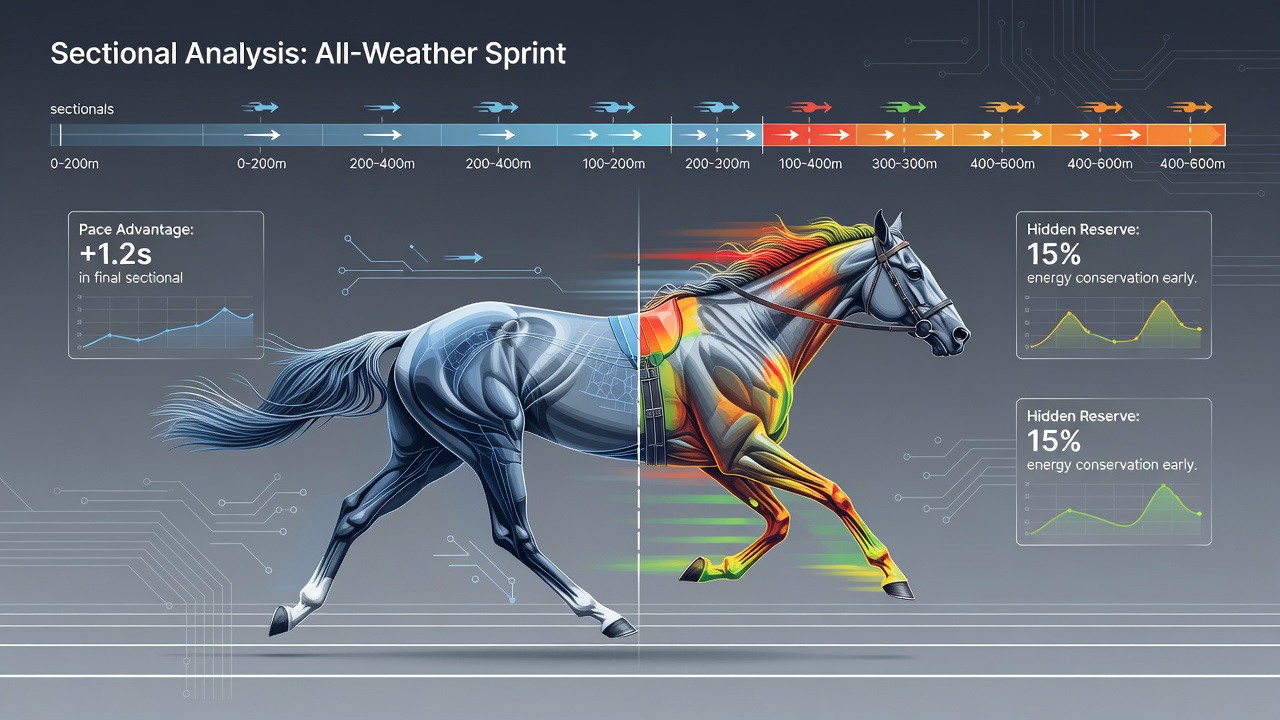
Sectional analysis breaks race times into measured segments, and this approach has gained traction among those examining all-weather sprint contests where surface consistency allows precise comparisons. Data from multiple tracks shows that early sectional splits often reveal which runners maintain hidden speed reserves that traditional finishing times overlook, particularly on Polytrack and Tapeta surfaces that respond differently to weather changes compared with turf.
Understanding Sectional Metrics in Sprint Contexts
Analysts divide races into 200-metre or furlong intervals, recording times that expose how quickly horses reach peak velocity after the start. In all-weather sprints, the first two sectionals frequently determine outcomes because the uniform surface reduces variables like going changes, and studies from racing authorities indicate front-runners who post sub-11-second splits over the initial 400 metres secure disproportionate advantages when the overall race distance stays at five or six furlongs. Observers note that these early figures correlate strongly with final placings once field sizes and draw biases receive adjustment.
Researchers at several training centres have compiled databases spanning thousands of runs, revealing patterns where horses with superior early sectionals outperform market expectations on synthetic tracks. The data indicates that closers need exceptional middle-section acceleration to overcome the pace set by leaders, whereas on turf the same profile might prevail more often due to variable ground conditions. This distinction matters most during summer fixtures when all-weather meetings fill gaps in the calendar.
Track-Specific Pace Profiles Emerging in 2026
Records from Lingfield, Kempton and Wolverhampton through August 2026 demonstrate that average winning sectional times for five-furlong events sit 0.4 seconds faster than the five-year average, a shift attributed to surface maintenance upgrades rather than changes in horse populations. Those monitoring the figures point out that certain stalls benefit from shorter run-up distances to the first timing point, creating repeatable edges that sectional data quantifies more reliably than raw speed ratings alone.
One dataset compiled by independent timing services compared 1,200 all-weather sprints and found that runners posting the quickest first-furlong split won 28 percent of races when the field exceeded ten runners, a rate notably higher than their 19 percent strike rate across all surfaces. The same research highlights how middle-section deceleration on Tapeta tracks often hands victory to horses that conserve energy early, a nuance that becomes visible only when sectionals replace aggregate times.
Comparative Data from International Synthetic Circuits
Similar analysis conducted on Australian synthetic tracks by Racing Australia shows parallel trends, where early pace figures predict outcomes more accurately in sprints than in longer events. European observers have cross-referenced these findings with data from French all-weather venues, noting that the absence of turf bias allows sectional splits to isolate true ability with greater consistency. The combined evidence suggests trainers who incorporate sectional targets into preparation routines achieve measurable improvements in strike rates on synthetic surfaces.
Additional work by the Jockey Club in the United States examined Tapeta sprints at tracks such as Golden Gate and Turfway Park, confirming that horses with balanced sectional profiles across the first three intervals maintain higher win percentages when switching from dirt. These international comparisons help contextualise UK all-weather results, because surface composition differences produce distinct pace demands that generic ratings fail to capture.
Practical Applications for Race Assessment
Professionals reviewing upcoming cards now overlay sectional databases with draw statistics to identify runners whose early pace aligns with favourable post positions. When a horse records a top-three first-sectional time in recent all-weather starts, its chance improves measurably if the draw avoids excessive ground loss on the turn. The reality is that such layered analysis separates contenders more effectively than speed figures derived solely from overall race times.
Case examples from the 2026 season include several sprints at Chelmsford where sectional leaders from wide draws still prevailed because their early splits exceeded the field average by sufficient margins to offset the extra distance travelled. Those patterns repeat across meetings, allowing systematic evaluation rather than reliance on anecdotal track bias observations.
Conclusion
Sectional analysis supplies measurable indicators of pace advantages that remain hidden when only final times receive consideration. Data accumulated through 2026 continues to refine these models, particularly on all-weather circuits where surface uniformity supports reliable segment comparisons. The approach integrates with existing rating systems to produce assessments grounded in recorded splits rather than subjective impressions of race shape.