Seasonal Light Variations and Their Effects on Night Racing Margins
Written by Sage Klein · Jun 23, 2026
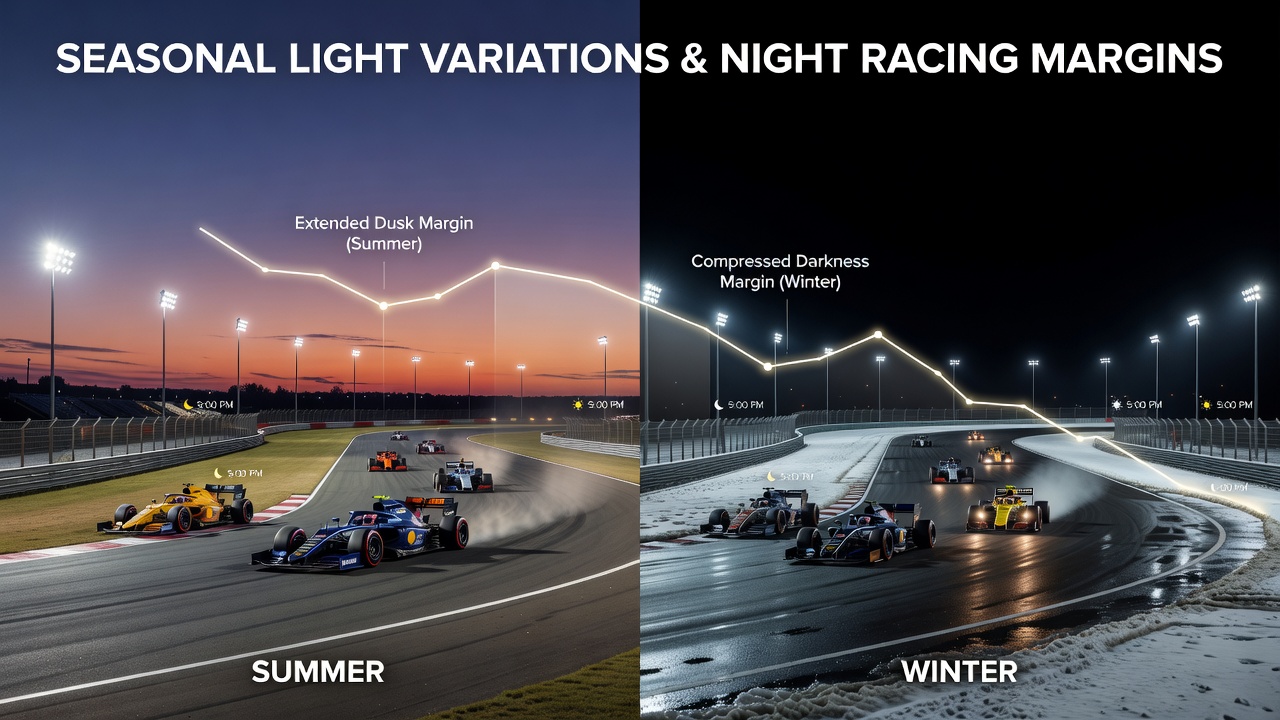
Seasonal Light Variations and Their Effects on Night Racing Margins
Seasonal shifts in daylight duration create measurable changes in visibility and environmental conditions during night racing events across multiple disciplines including thoroughbred and harness racing. These variations influence track surfaces, animal physiology, and overall event dynamics in ways that data from racing authorities track consistently over time. Researchers have documented how longer or shorter twilight periods alter the transition into artificial lighting, which in turn affects performance metrics that determine final margins between competitors.
Daylight Patterns Across Seasons and Their Direct Influence
Earth's axial tilt produces predictable changes in solar exposure that extend or compress the hours between sunrise and sunset depending on latitude and time of year. In northern regions, June brings extended daylight that delays full darkness until later in the evening, whereas December compresses twilight into shorter windows. Racing calendars scheduled around these patterns show corresponding adjustments in start times, and data collected by organizations such as the Australian Racing Board indicate that night events held near the summer solstice experience different ambient light bleed compared with winter fixtures. Those adjustments matter because residual natural light interacts with floodlight systems, creating gradients that jockeys and drivers must navigate during the opening furlongs.
Studies from veterinary colleges have measured cortisol and melatonin fluctuations in equine athletes exposed to these shifting light environments. Results reveal that horses competing under prolonged twilight conditions exhibit slightly altered warm-up responses, which can translate into fractions of a second at the first timing marker. When aggregated across large sample sizes, these small differences appear in the distribution of winning margins recorded in official charts.
Track Surface and Visibility Interactions
Artificial illumination on racecourses compensates for darkness yet cannot fully replicate uniform daylight. Seasonal cloud cover, humidity levels, and atmospheric particulates further modulate how light scatters across the track. In months when pollen counts or moisture levels rise, beam diffusion increases, which some racecourse managers mitigate through targeted lighting upgrades. Observations compiled by the North American Jockey Club show that races conducted under high summer humidity often record tighter early margins, while clearer winter nights correlate with marginally wider spreads in the first quarter-mile. These patterns emerge after controlling for class, distance, and surface type.
Lighting Technology and Seasonal Calibration
Modern LED arrays allow operators to adjust color temperature and intensity, yet calibration schedules frequently align with broader seasonal maintenance cycles rather than daily light curves. Facilities that recalibrate systems monthly report fewer complaints about shadow pockets during shoulder seasons when twilight length changes most rapidly. Data logs from several European tracks indicate that recalibration performed in May and September reduces variance in sectional times for night fixtures by measurable amounts. Such technical responses demonstrate how infrastructure decisions intersect with astronomical cycles to shape competitive outcomes.
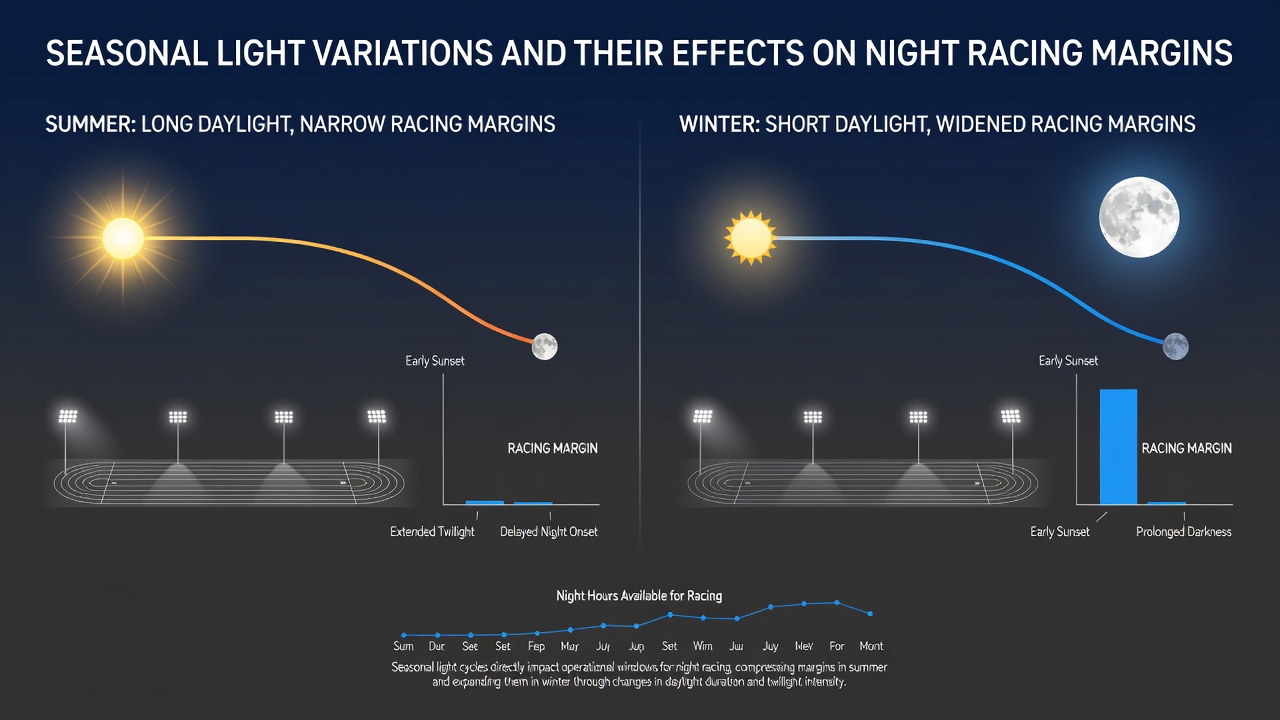
Performance Data and Margin Distributions
Statistical reviews of night racing results spanning multiple years reveal seasonal clustering in margin widths. Events staged in late spring and early summer tend to produce narrower spreads at the wire, whereas autumn and winter cards show slightly broader average margins when similar field sizes and distances are compared. Analysts attribute part of this pattern to cumulative effects of light exposure on recovery cycles between races, particularly for horses shipping across time zones or latitudes. A 2025 report issued by the Canadian Pari-Mutuel Agency documented consistent seasonal signatures in both sprint and route events held after sunset.
Trainers adjust preparation routines accordingly, incorporating supplemental lighting in barns during periods of rapid daylight change. These protocols aim to stabilize circadian cues that influence muscle readiness and reaction times once horses reach the track. Longitudinal records kept by large stables confirm that such adjustments correlate with stable performance metrics regardless of calendar month.
Regional Variations and Calendar Planning
Latitude determines the amplitude of seasonal light swings, so southern hemisphere calendars experience opposite effects during the same calendar months. Events held in June 2026 at southern tracks will coincide with shorter days and earlier sunsets, reversing the pattern seen at northern venues. Racing jurisdictions account for these differences when setting broadcast schedules and safety protocols. International handicappers review historical sectional data from both hemispheres to identify comparable conditions across borders.
Weather services supply detailed twilight forecasts that racing offices incorporate into daily briefings. When unexpected cloud banks extend natural light or clear skies accelerate the drop to full darkness, on-course officials may authorize minor lighting tweaks. These real-time decisions add another layer to the environmental variables already shaped by seasonal cycles.
Conclusion
Seasonal light variations influence night racing through interconnected effects on visibility, equine physiology, track conditions, and operational adjustments. Data collected across multiple jurisdictions demonstrate recurring patterns in margin distributions that align with changes in daylight duration. As lighting technology and scheduling practices continue to evolve, racing authorities maintain records that allow ongoing analysis of these environmental factors and their measurable contributions to competitive results.