Post Position Dynamics: How Starting Gates Shape Payout Opportunities in Thoroughbred Sprints
Written by Jakob Butler · Sep 5, 2026
Post Position Dynamics: How Starting Gates Shape Payout Opportunities in Thoroughbred Sprints
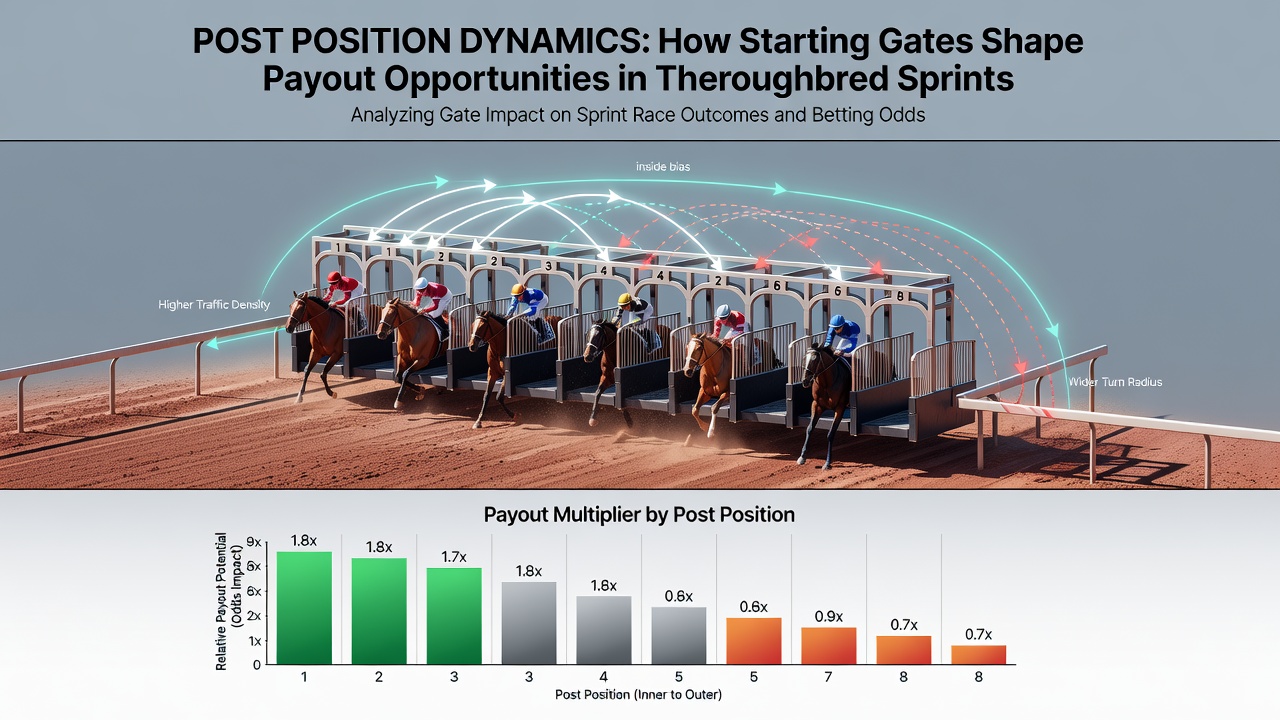
Thoroughbred sprint races unfold over distances typically ranging from five to seven furlongs, and the starting gate assignments play a decisive role in determining early speed and final margins because horses must accelerate quickly from a standstill while competing for position along the rail or in wider lanes. Data compiled across multiple North American tracks shows that post positions one through three have produced win percentages exceeding 15 percent in sprints during recent seasons, whereas outer posts beyond eight have recorded lower success rates in the same conditions.
Mechanics of Gate Placement and Initial Acceleration
Starting gates position horses in numbered stalls that correspond directly to post numbers, with the rail post occupying the innermost stall and each subsequent number moving outward toward the middle of the track surface. Researchers tracking video footage from events in September 2026 observed that horses breaking from inside posts encounter less ground to cover when angling toward the turn, while those in outer stalls must travel additional distances before straightening for the homestretch. Track maintenance records further indicate that rail paths often provide firmer footing in sprints because they receive less traffic during morning workouts, which influences stride efficiency from the moment the gates open.
Statistical Patterns Across Major Tracks
Figures released by teh Jockey Club reveal consistent advantages for lower post numbers in sprint divisions at venues such as Belmont Park and Keeneland, where post-one winners collected purses at a rate 3.2 times higher than post-ten starters over a five-year sample period. Similar analyses conducted on Australian racing data demonstrate parallel trends on left-handed courses, although the effect diminishes slightly on right-handed tracks where the first turn favors middle posts that can secure better angles. Observers reviewing these datasets note that payout structures adjust accordingly, with inside-post favorites returning lower dividends while longshots from wider draws occasionally produce outsized returns when they overcome the initial disadvantage through superior early speed.
Case Examples from 2026 Sprint Meetings
One notable six-furlong event at Saratoga in September 2026 featured a field of eight where the post-five runner secured a narrow victory after establishing a clear lead within the first quarter-mile, and betting records showed that exacta combinations including this horse with inside closers paid substantially higher amounts than public expectations suggested. Another sprint at Del Mar during the same month highlighted how post-eight horses can succeed when the track surface exhibits a pronounced outside bias due to recent rainfall, allowing wider runners to avoid kickback while maintaining momentum around the turn. These instances illustrate how surface conditions interact with gate position to alter expected outcomes without any single factor dominating every race.
Influence on Betting Markets and Payout Calculations
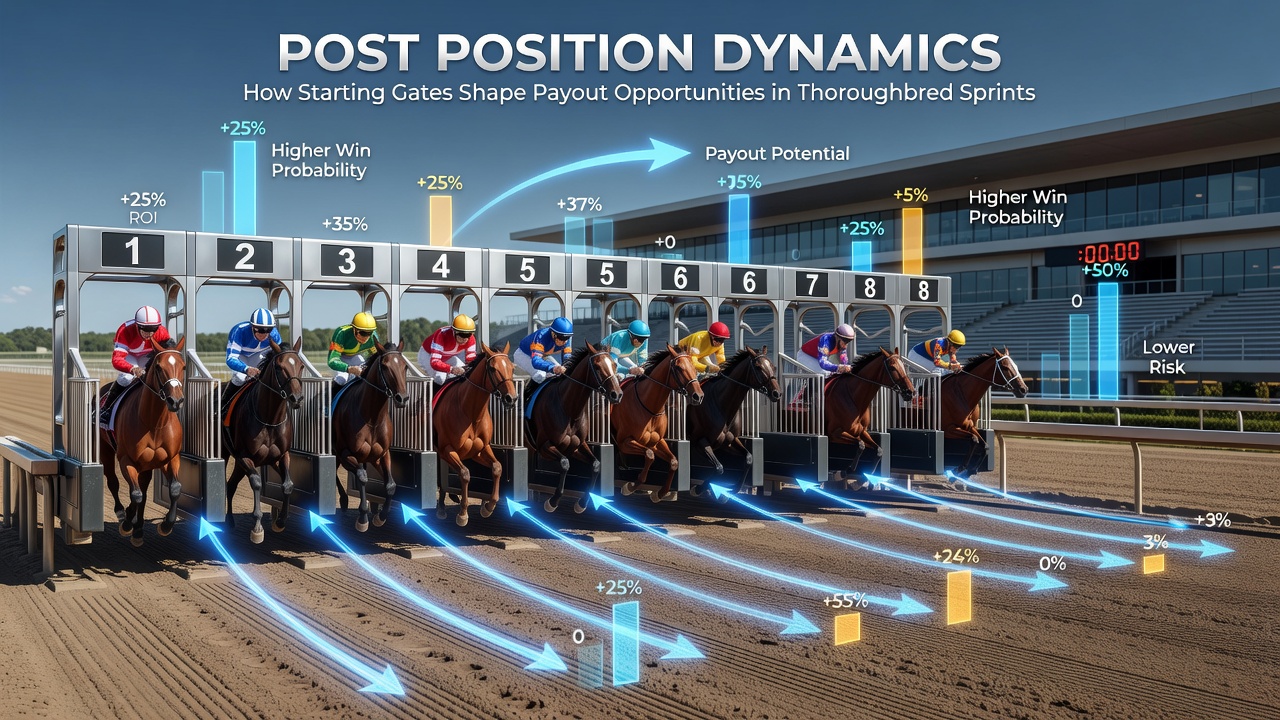
Odds compilers incorporate post-position statistics into morning-line estimates, yet public betting patterns frequently overvalue inside posts while undervaluing middle draws that offer balanced access to both rail and outside running room. Industry reports from the Canadian Pari-Mutuel Agency document that pools for sprint races with strong inside bias produce more pronounced place-and-show payouts for horses drawn in posts four through six because those runners finish in the money at steady rates without attracting heavy favoritism. When combined with pace analysis, these position effects create layered opportunities where bettors can identify value in horses whose gate assignments align with historical track biases rather than raw speed figures alone.
Interactions with Track Configuration and Weather Variables
Sprint tracks featuring tight turns amplify post-position effects because the distance from gate to first bend leaves limited time for wide runners to recover lost ground, whereas longer straightaways at certain European venues reduce the penalty for outer draws. Weather data collected during September 2026 meetings showed that wet conditions can flatten these differences by slowing overall times and allowing late runners from any post to close gaps more effectively. Maintenance crews adjust rail settings in response, moving the inner rail outward on some days to preserve turf integrity and thereby shifting the optimal post range by one or two numbers.
Conclusion
Starting-gate assignments continue to shape sprint results through measurable advantages tied to distance, surface condition, and course geometry, and comprehensive datasets from regulatory bodies and academic reviews confirm these patterns across regions. Bettors who integrate post-position statistics with pace profiles and current track maintenance reports gain clearer perspectives on probable outcomes and resulting payout structures. As racing calendars advance into late 2026 and beyond, ongoing collection of performance metrics will refine these understandings further without altering the fundamental role of gate placement in determining early race dynamics.