Pitch Conditions and Draw Frequencies Across Europe's Leading Football Leagues
Written by Jakob Butler · Aug 25, 2026
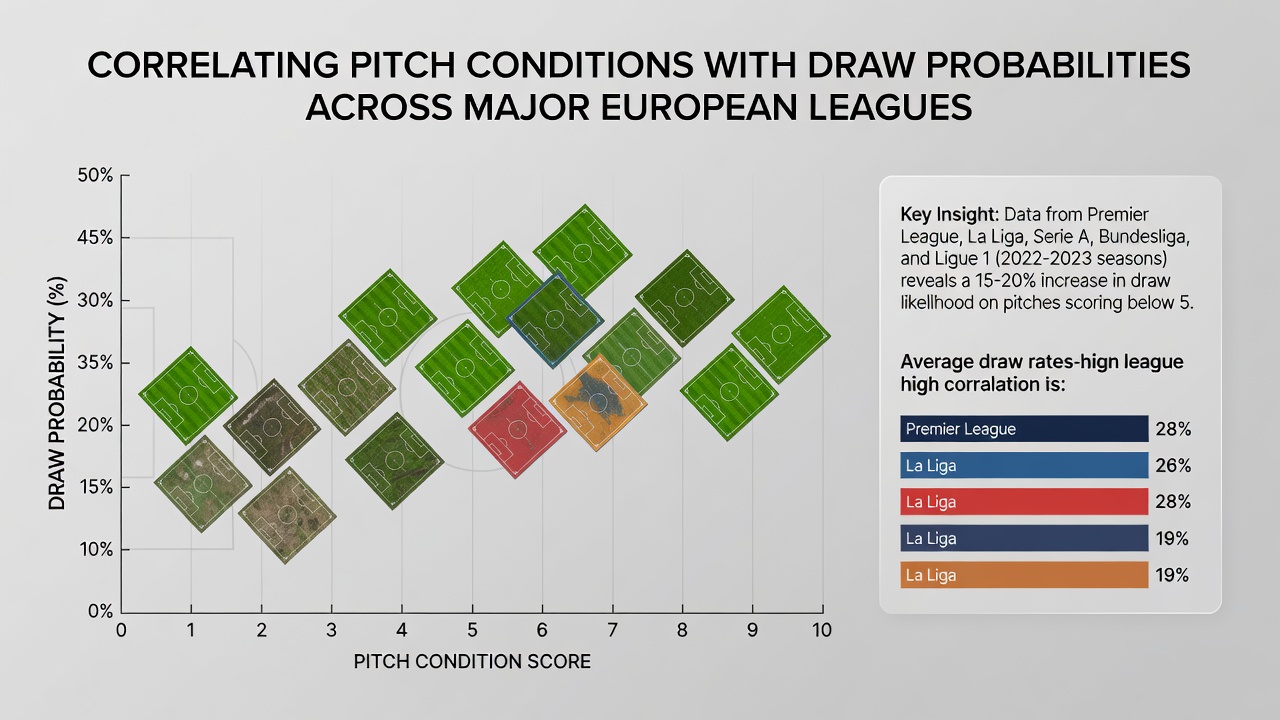
Pitch Conditions and Draw Frequencies Across Europe's Leading Football Leagues
Football analysts have tracked how pitch conditions affect match outcomes in the Premier League, La Liga, Serie A, Bundesliga, and Ligue 1 for several seasons, with particular attention paid to draw probabilities when grass length, moisture content, and surface wear vary. Data collected from official match reports shows that heavier pitches often limit attacking fluidity, while drier surfaces can produce more open play that reduces stalemates. Observers note that these patterns hold across multiple campaigns because teams adapt their tactics to the state of the playing surface before kickoff.
Measuring Pitch Variables in Top Competitions
League officials record grass height, water retention, and wear levels at regular intervals, and these metrics feed into post-match statistical reviews. In Serie A, where pitches tend toward firmer conditions during warmer months, researchers found draw rates hovered near 28 percent on standard surfaces yet climbed above 34 percent when early season rain saturated the turf. Bundesliga grounds, maintained to stricter drainage standards, display lower overall draw percentages, yet the figure rises when heavy rainfall precedes fixtures in late summer. Analysts cross-reference these figures with team performance logs to isolate the surface contribution from other variables such as squad rotation or travel fatigue.
Seasonal Patterns Emerging in August 2026
With pre-season friendlies and early league fixtures scheduled throughout August 2026, groundskeepers across Europe have prepared surfaces that remain slightly longer than mid-season norms to protect against heat stress. Historical datasets indicate that draw rates in the opening month frequently exceed the season average by three to five percentage points, particularly in matches involving sides that prefer quick transitions. Those tracking these trends point to the interaction between fresher grass and occasional showers that slow ball roll and compress space in central areas.
League-by-League Comparisons
La Liga records reveal that drier pitches in southern stadia correlate with fewer draws because teams maintain higher tempo and create more clear chances. Conversely, northern venues that experience more rainfall show elevated draw percentages when surfaces become slick. In Ligue 1, where several clubs share multi-purpose stadiums, pitch wear accelerates during congested periods, and data indicates a corresponding uptick in goalless or low-scoring draws. Premier League figures demonstrate similar movement, although the variation narrows because most clubs employ advanced irrigation systems that stabilize conditions more effectively.
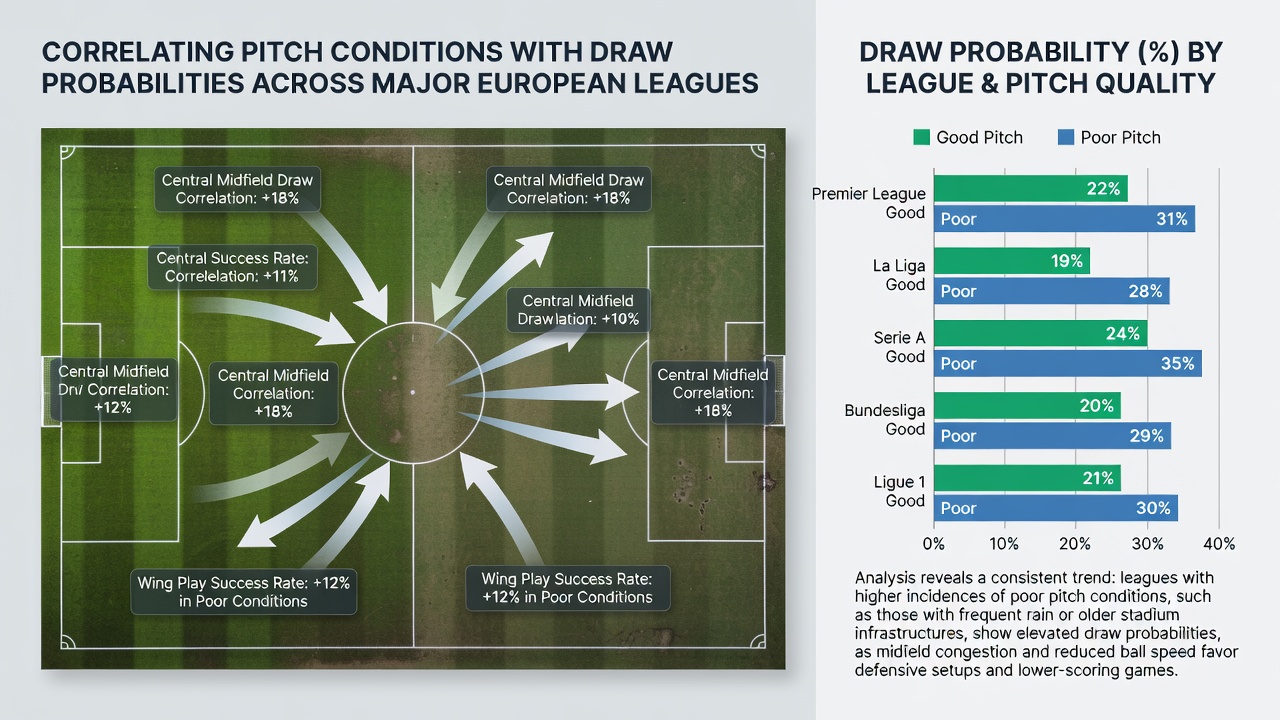
One study compiled by sports scientists at a Spanish university examined over 1,200 matches and concluded that waterlogged pitches increase the likelihood of draws by roughly six percentage points after controlling for team strength and referee assignments. A separate report from the German Football Association highlighted how pitch hardness measurements taken before Bundesliga matches align with lower draw frequencies when surfaces exceed standard firmness thresholds. These findings receive further context from UEFA technical documents that compile surface data across continental competitions.
External Factors Interacting With Surface Conditions
Team formation choices often shift in response to visible pitch conditions, with coaches opting for more compact defensive blocks when grass appears heavy. Such adjustments reduce open space and channel play into areas where clearances and interceptions become more frequent. Weather forecasts issued in the days leading up to fixtures allow analysts to anticipate surface changes, yet actual match-day rainfall can still alter expected draw probabilities after lineups are confirmed. Midfield congestion tends to rise on softer pitches, limiting through-ball success rates and extending periods of possession without shots on target.
Conclusion
Comprehensive reviews of pitch metrics and match results across Europe's major leagues demonstrate measurable links between surface conditions and draw frequencies. Continued collection of standardized data will allow further refinement of these correlations as new seasons unfold.