Pace Clusters Decoded: Refining Multi-Leg Flat Race Selections Through Track Analysis
Written by Paul Reed · Jul 25, 2026

Pace Clusters Decoded: Refining Multi-Leg Flat Race Selections Through Track Analysis
Flat racing tracks reveal distinct pace clusters where horses bunch into groups based on their early speed and positioning, and analysts track these patterns to sharpen selections across multiple legs in exotic bets. Data from major circuits shows that identifying whether a race will unfold with a strong front-running cluster or a more even midfield group changes how bettors construct their multi-race tickets, especially when combining races from different meetings on the same card.
Understanding Pace Cluster Formation on Level Surfaces
Observers note that pace clusters emerge when horses settle into predictable early fractions, and these groupings depend on factors such as rail position, wind direction, and the presence of confirmed front-runners versus hold-up types. Researchers at racing data centers have mapped thousands of flat races and found that clusters tighten on straight courses with minimal turns, whereas tracks with pronounced bends often stretch the early groups into longer strings. Those patterns matter because a compact front cluster tends to produce faster overall times, while a spread-out midfield cluster can lead to more sustained closing efforts from horses positioned further back.
Studies conducted across European and North American flat circuits indicate that surface composition influences cluster stability, with turf tracks showing more fluid regrouping than polytrack or dirt surfaces where early speed holds firmer. One analysis covering 2025 meetings highlighted how July schedules, with their mix of high-class and handicap events, frequently produce contrasting cluster behaviors on consecutive days at the same venue.
Mapping Clusters to Multi-Leg Betting Structures
Bettors constructing multi-leg selections often cross-reference pace maps from each leg to avoid overexposure to similar scenarios, and data indicates that mixing one race with a strong front cluster alongside another featuring a deep-closing cluster improves ticket resilience. Figures from industry reports reveal that when two or more legs share the same early pace profile, the combined probability of a successful multi-race outcome drops because the same style of horse dominates across those races. Analysts therefore scan sectional timing databases to spot mismatches, then adjust their combinations accordingly.
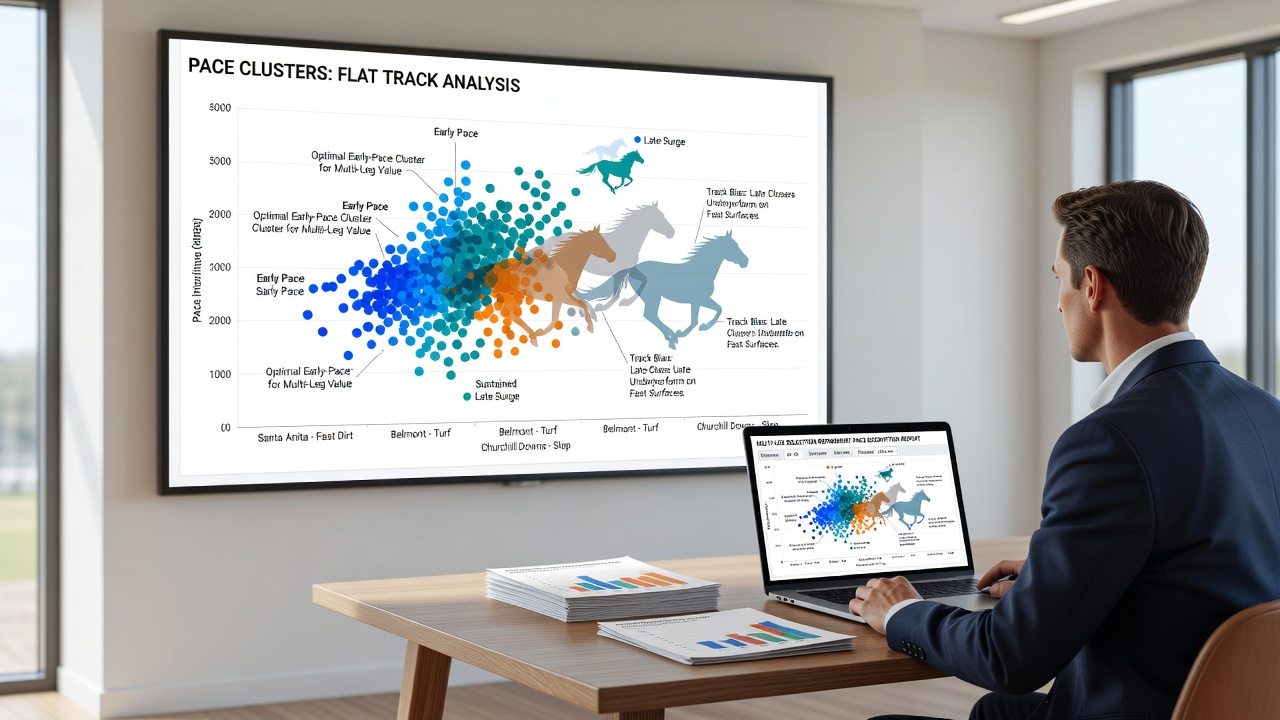
What's notable is how July 2026 fixtures, featuring several major summer festivals, have already produced cluster data that differs from spring patterns, with warmer ground conditions encouraging wider early spreads on certain tracks. Those shifts prompt bettors to recalibrate their multi-leg approaches rather than rely on winter or spring templates. According to records maintained by the Equibase database, races run on firmer July surfaces show a measurable increase in horses adopting mid-race positions within clusters, altering the usual front-end bias observed earlier in the year.
Practical Tools for Cluster Identification
Modern software platforms compile historical sectional data and display cluster heatmaps for upcoming races, allowing users to compare current fields against past examples from the same track and distance. These tools draw on timing points recorded at multiple stages of each race, and they flag when a new entrant is likely to join or disrupt an established cluster. Observers who review these outputs before finalizing multi-leg tickets report fewer instances of all selections falling into the same pace trap.
Additional context comes from official race reports issued by bodies such as Racing Australia, which publish average early fractions for each meeting. When these averages deviate from long-term norms, analysts adjust cluster projections for the day and revise their multi-race combinations to account for the altered dynamics.
Case Patterns Observed in Recent Meetings
One documented sequence from a July 2025 midweek card showed three consecutive flat races developing tight front clusters, and multi-leg tickets built exclusively around early speed horses returned lower success rates than those that included at least one deeper-running selection. Subsequent review of sectional data confirmed that the track had produced unusually quick opening quarters, compressing the field into a narrow early group each time. Bettors who recognized the pattern mid-card and shifted later legs toward hold-up types achieved more balanced coverage.
Similar observations emerged at continental tracks during the same period, where researchers noted that cluster compression often coincided with specific rail configurations and headwinds. Those findings reinforce the value of cross-checking multiple data layers before committing to a multi-leg structure.
Conclusion
Deciphering pace clusters across flat tracks supplies a measurable edge when refining multi-leg horse racing selections, and the approach relies on consistent sectional data, historical comparisons, and awareness of daily track variables. As July 2026 fixtures continue to unfold, updated cluster maps will further inform how bettors distribute risk across linked races. The method remains grounded in recorded timing patterns rather than speculation, offering a repeatable framework for those who track pace behavior across varied flat surfaces.