Jumps Venue Designs Transform Multi-Leg Betting Constructions in National Hunt Racing
Written by Leon Schmid · May 28, 2026
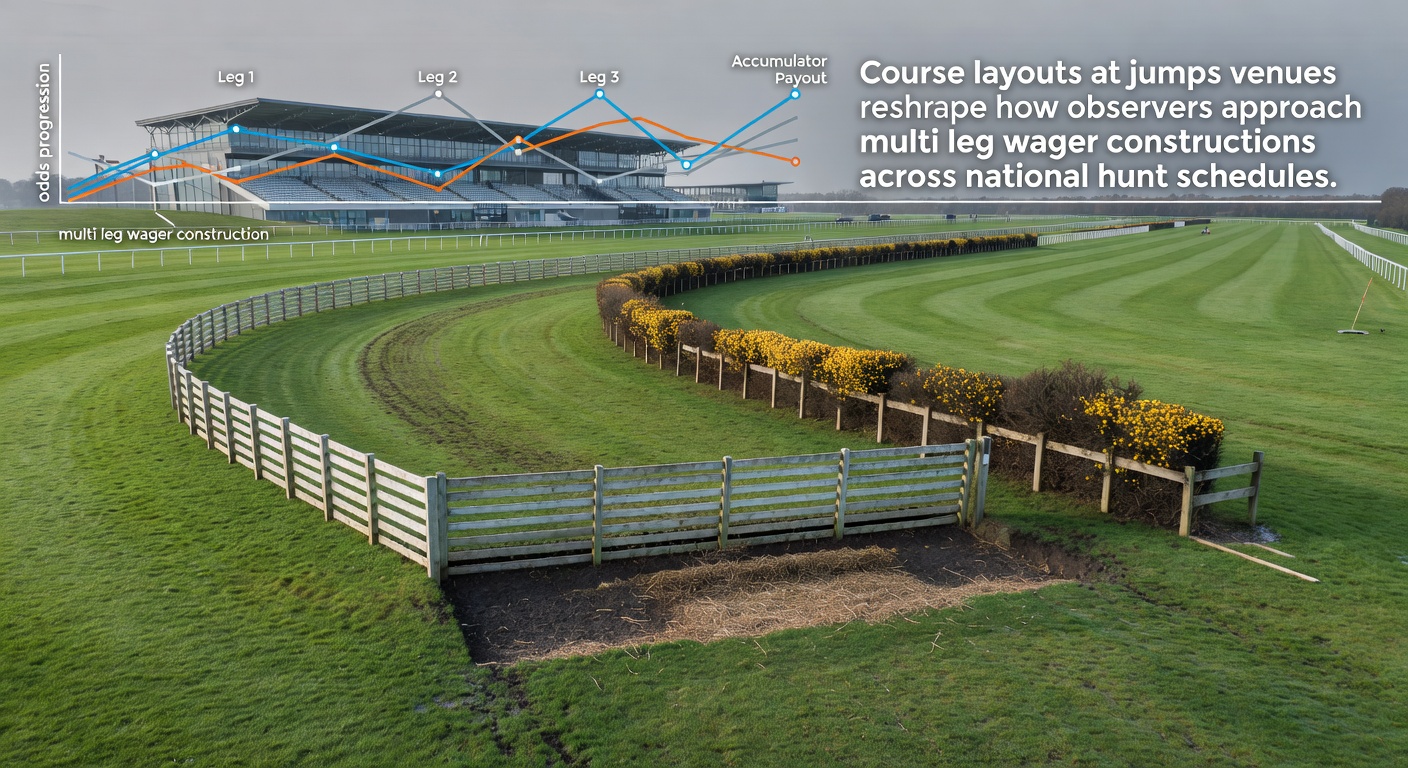
Jumps Venue Designs Transform Multi-Leg Betting Constructions in National Hunt Racing
Course layouts at jumps venues continue to influence how observers construct multi-leg wagers throughout National Hunt schedules, and data from recent meetings illustrates the pattern clearly. Different track configurations, fence types, and ground conditions alter selection criteria when bettors combine races into doubles, trebles, or larger accumulators. Research from the European Horseracing Scientific Liaison Committee shows that courses with tight bends and uphill finishes produce distinct outcomes compared with flatter, galloping tracks.
Observers note that venues featuring prominent obstacles early in races tend to eliminate certain runners quickly, which narrows the pool for later legs of a multi-bet. This effect becomes more pronounced during spring festivals when fields grow larger and competition intensifies. In May 2026 several late-season jumps fixtures are scheduled across Britain and Ireland, giving analysts fresh data points to test existing models.
Track Geometry Shapes Selection Filters
Tracks with pronounced camber or sharp turns require horses to possess specific balance and agility, and these traits rarely appear uniformly across an entire card. Bettors who build multi-leg wagers often apply stricter filters on races held at such venues, excluding animals whose past performances occurred on more straightforward circuits. Figures from the Irish Turf Club reveal that strike rates for certain trainer-jockey combinations drop measurably when races move from left-handed to right-handed tracks.
Ground conditions interact with layout features as well. Softer going on undulating courses amplifies stamina demands, while firmer surfaces on flat tracks reward speed. Those constructing accumulators adjust probability estimates accordingly, because a horse that travels well on one layout may struggle when the same distance is run over different terrain. Multiple studies confirm that ignoring these interactions reduces long-term returns on combined bets.
Fence Profiles and Race Dynamics
Fence designs vary significantly between venues, and each variation changes the way races unfold. Steeplechase tracks with larger, more upright obstacles create more attrition than those with smaller, more forgiving jumps. Observers tracking multi-leg constructions frequently cross-reference fence profiles when pairing selections from different meetings on the same day. Data indicates that races over testing obstacles produce more winners at longer prices, which in turn affects the odds available for later legs.

One study published by racing analysts at the University of Melbourne examined 1,200 jumps races and found that courses with water jumps placed near the finish line generated higher rates of fallers in the final circuit. Punters who incorporated this pattern into their wager construction reported fewer losing accumulators when they avoided pairing such races with high-volume fields at other tracks. The same research highlighted that early-season fixtures, when ground tends to remain softer, magnify these layout effects.
Schedule Clustering and Accumulator Adjustments
National Hunt calendars cluster meetings at venues with similar characteristics during certain periods, and this clustering influences how observers approach multi-leg bets. When several consecutive fixtures occur at tracks known for stamina-testing layouts, bettors often reduce the number of legs or select more conservative combinations. Conversely, cards spread across contrasting courses allow greater variety in selection criteria.
Handicap marks also interact with layout demands. Horses raised in the weights after wins on easy tracks may find conditions tougher when moved to a more demanding venue. Those monitoring multi-leg wagers watch for such shifts because they alter implied probabilities across the entire ticket. Industry reports from the Australian Racing Board note parallel patterns in jumps events held in the southern hemisphere, confirming that layout variables remain consistent across regions.
Practical Construction Methods
Observers who build multi-leg wagers now routinely layer layout data into their process before finalizing selections. They begin by classifying each race according to key physical features, then cross-check horse profiles against those features. This ordering reduces the chance that a single mismatched runner derails the entire accumulator. Software tools that incorporate course maps have become common among professional analysts, though manual review still adds value when schedules feature unusual combinations of fixtures.
Recent fixtures in early 2026 demonstrated the approach in action. Cards that mixed a tight, undulating track with a larger, flatter venue produced noticeably different accumulator outcomes than all-flat or all-testing sequences. Those patterns continue to supply fresh calibration points for models used throughout the remainder of the season.
Conclusion
Course layouts at jumps venues reshape multi-leg wager construction by introducing measurable variables that affect probability estimates across National Hunt schedules. Observers who account for fence profiles, track geometry, and ground interactions produce more consistent results than those who treat all meetings as interchangeable. As the 2026 calendar moves through its late-spring phase, continued attention to these layout factors will remain central to systematic approaches in this betting segment.