Fixture Congestion and Late-Season Performance Variations in European Football Leagues
Written by Sage Klein · Jun 13, 2026
Fixture Congestion and Late-Season Performance Variations in European Football Leagues
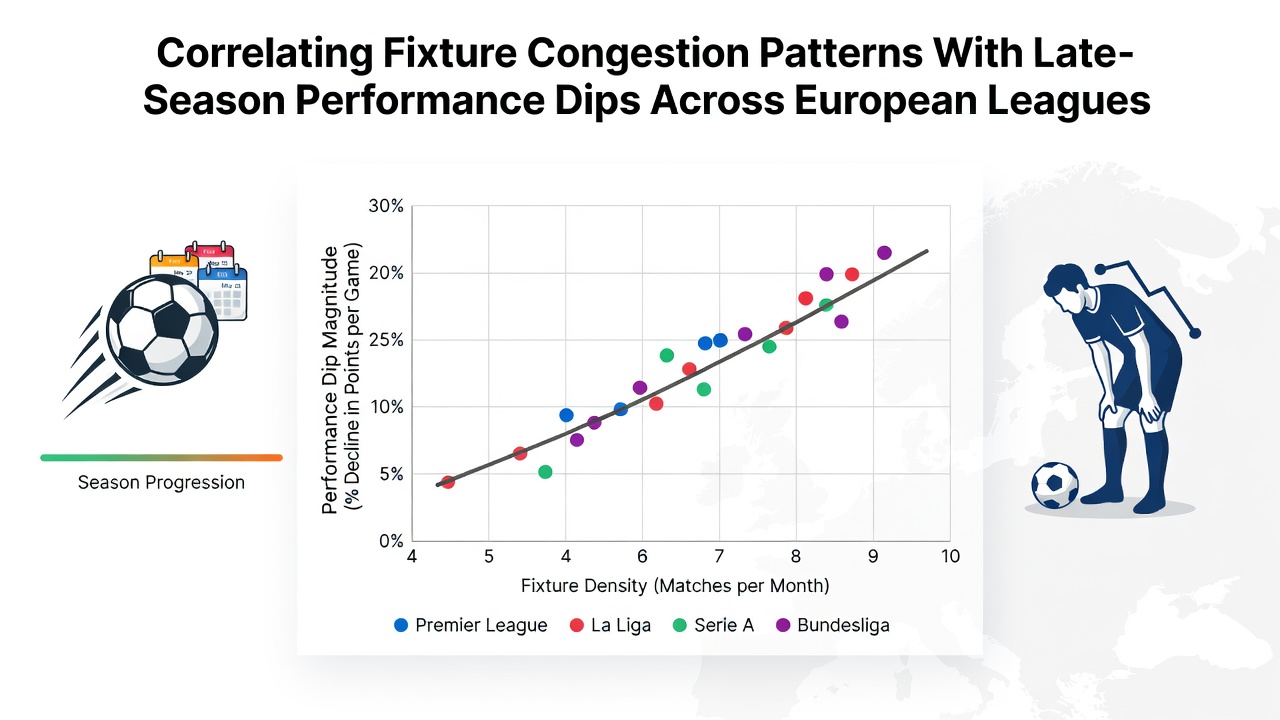
European football calendars pack multiple competitions into single seasons, creating measurable patterns where teams face elevated match counts between January and May. Observers note that clubs competing in domestic leagues plus European tournaments and cup ties often log 50 or more fixtures by spring, while those with lighter loads stay closer to 40. Data from the 2025/26 campaign illustrates how these disparities align with shifts in results during the final third of the season.
Defining Fixture Congestion Across Competitions
Fixture congestion arises when recovery windows shrink below five days between matches, a threshold identified in physiological studies tracking muscle fatigue and injury rates. Teams in the UEFA Champions League and Europa League frequently encounter such clusters, especially when national cup ties add midweek dates. Bundesliga and Serie A records show that sides advancing deep in Europe accumulate extra games at rates 25 percent higher than domestic-only competitors, according to aggregated league statistics released in early 2026.
Patterns Observed in Major Leagues
Premier League tracking data reveals that clubs with 14 or more matches in the March-to-May window posted win percentages dropping from 48 percent pre-February to 37 percent afterward. Similar trends appear in La Liga, where researchers from Spanish sports institutes documented a 9 percent decline in points per game for teams exceeding 48 total fixtures. Bundesliga figures indicate that congested schedules correlate with increased substitute usage and reduced high-intensity running metrics in the closing months, patterns consistent across the 2024/25 and 2025/26 seasons.
Recovery Metrics and Performance Indicators
Physiological monitoring programs employed by several top clubs measure markers such as creatine kinase levels and sleep duration to quantify fatigue. When intervals between matches fall below 72 hours, these indicators rise sharply, coinciding with higher rates of non-contact injuries. A multi-league analysis covering the top five European divisions found that teams averaging fewer than four rest days per fixture in the final 12 weeks experienced a 14 percent increase in muscle strain incidents compared with less burdened sides. Such findings draw from datasets compiled by performance analysts working with clubs in Germany and Italy.
Comparative Data From 2025/26 Season
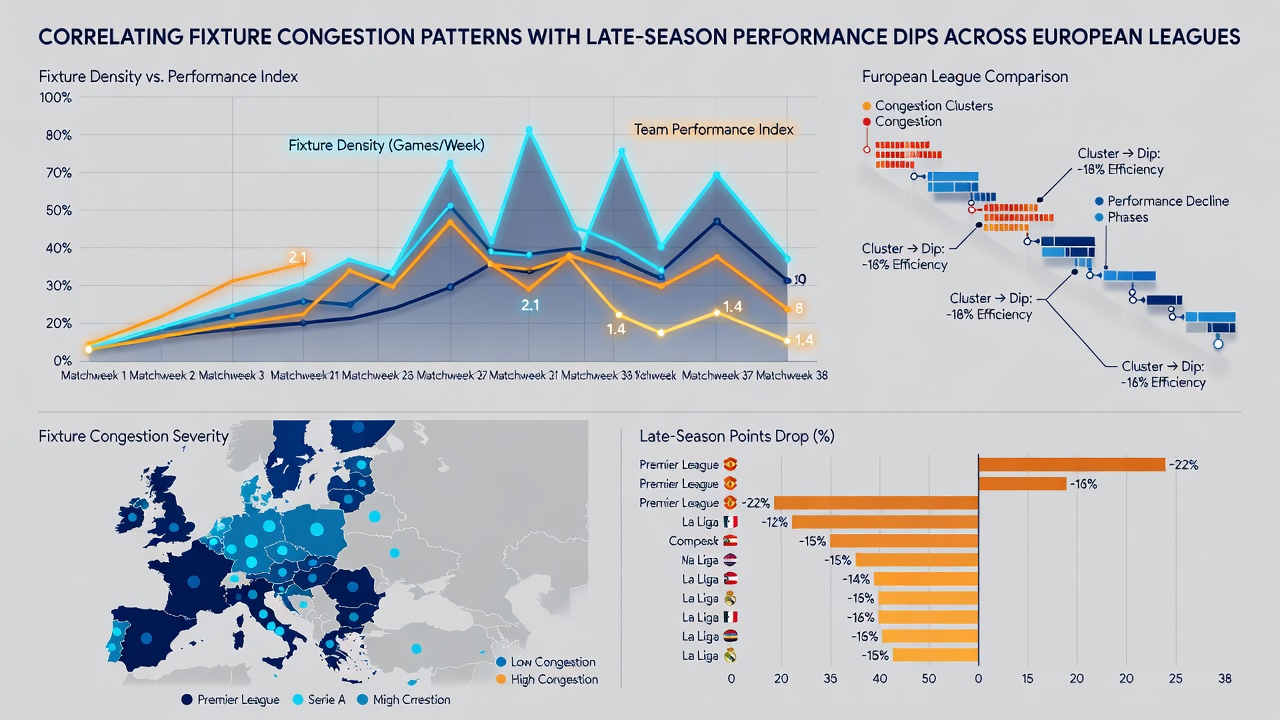
By June 2026, post-season reviews highlighted specific examples. One Bundesliga side that reached the Champions League semifinals played 58 matches overall and secured only 1.12 points per game after matchday 25, down from 2.05 earlier. In contrast, a mid-table La Liga team with 42 fixtures maintained steady output, finishing with comparable points tallies in both halves of the campaign. Serie A reports noted parallel outcomes, where cup-final participants showed steeper drops in expected goals scored during April and May. These observations align with broader trends tracked by European club associations monitoring workload across borders.
Variables Influencing Outcomes
Squad depth plays a central role in mitigating effects. Clubs maintaining two players of comparable quality in each position demonstrate smaller performance gaps, as rotation preserves freshness. Travel distance adds another layer, with teams crossing time zones for European away legs recording elevated fatigue scores. Weather conditions in northern leagues during late winter further compound recovery challenges, whereas southern divisions face different stressors from fixture timing. Statistical models incorporating these factors improve prediction accuracy for end-of-season results by accounting for both match volume and external conditions.
League-Specific Responses and Adaptations
Some federations have adjusted calendars to insert longer breaks. The French league, for instance, extended its winter pause in 2025/26, resulting in fewer congested clusters for Ligue 1 participants. Bundesliga clubs have increased use of sports science staff to optimize training loads during short turnaround periods. Across all divisions, data-sharing initiatives among medical teams allow clubs to benchmark recovery protocols against peers facing similar schedules. These adaptations show measurable impact in reduced injury downtime, though performance consistency remains tied to overall fixture distribution.
Conclusion
Records from the 2025/26 season confirm that elevated fixture counts connect with measurable shifts in win rates, goal differentials, and physical output during late campaign stages across Europe's leading leagues. Patterns emerge most clearly when recovery intervals contract and squad resources face sustained demand. Continued collection of performance and physiological data supports targeted scheduling adjustments while highlighting the role of preparation strategies in managing these demands.