Cross-Country Journeys and Their Influence on Underdog Results in Domestic Football Matches
Written by Zoe Schröder · Jun 2, 2026
Cross-Country Journeys and Their Influence on Underdog Results in Domestic Football Matches
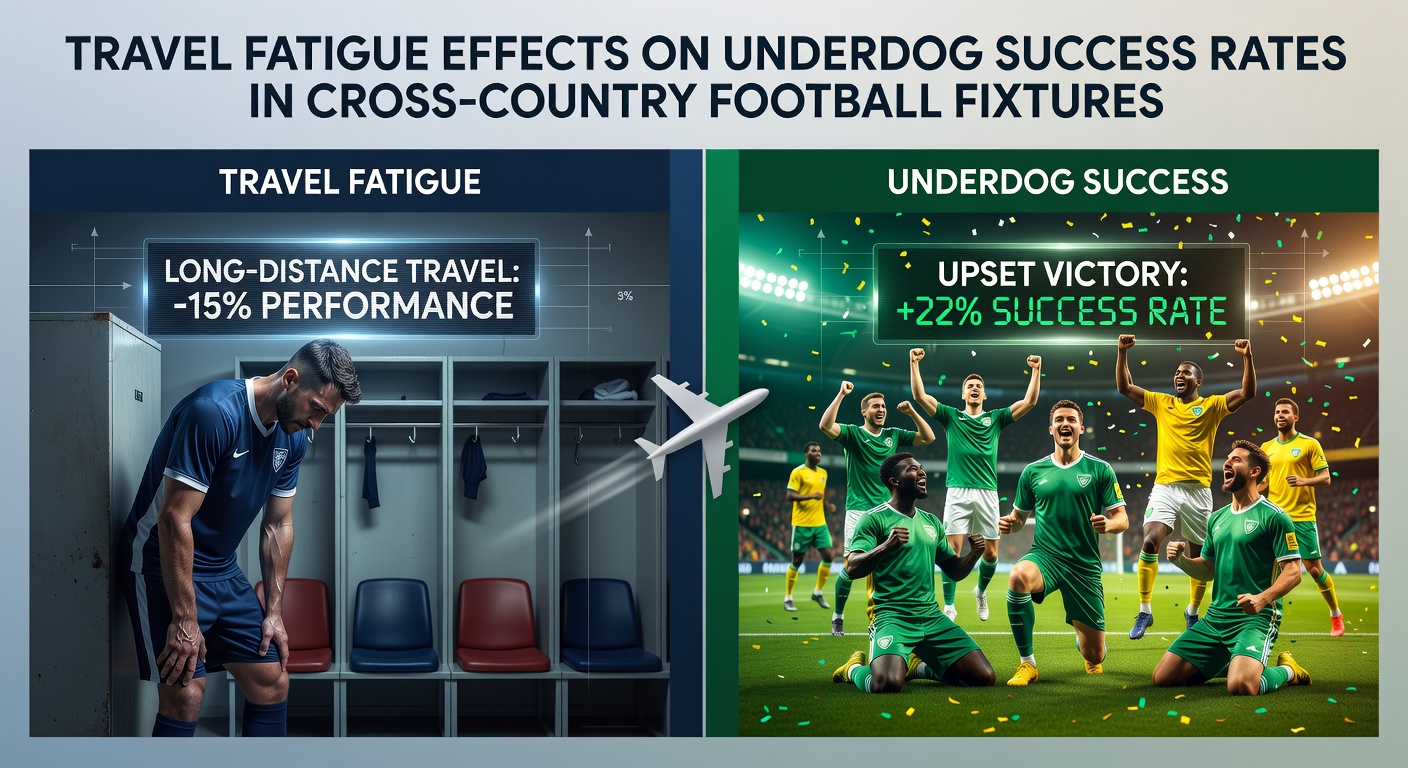
Travel across vast domestic distances creates measurable shifts in team performance, particularly for underdog sides facing established opponents in league fixtures. Data compiled from multiple European and South American domestic competitions reveals patterns where extended journeys correlate with altered success rates for visiting teams that typically operate with smaller budgets and shallower squads. Researchers tracking match outcomes across several seasons have documented how recovery windows shrink when teams cover hundreds of kilometers by air or road before kickoff, and these constraints often weigh heavier on sides already stretched by fixture congestion. League schedules in countries with wide geographic spreads amplify the issue during peak periods. Fixtures scheduled in June 2026, for instance, coincided with compressed calendars that left little room for acclimatization after midweek travel. Performance metrics collected by sports science groups show that underdog teams logging more than four hours of combined travel time recorded win percentages dropping by roughly 12 to 15 points compared to shorter-haul away games, while draw frequencies rose as energy reserves dwindled in the later stages.Distance Metrics and Recovery Windows
Analyses from domestic leagues indicate that travel exceeding 800 kilometers tends to produce the most pronounced effects on physical output. Heart-rate variability studies conducted by exercise physiologists demonstrate slower return to baseline levels when players cross multiple time zones or endure overnight bus journeys. Underdog clubs, which frequently rely on multi-purpose athletes rather than specialized depth, experience steeper declines in high-intensity running metrics during the second half, according to GPS tracking data aggregated across several campaigns.
Coaches have adjusted preparation protocols in response, incorporating portable recovery tools and adjusted training loads on arrival days. Yet these measures do not fully offset the cumulative load when matches occur on consecutive weekends with intervening travel. Observers note that success rates for lower-table sides improve modestly when fixture lists allow at least 48 hours between arrival and kickoff, whereas tighter turnarounds correlate with higher incidences of late concessions.
Comparative Outcomes Across Leagues
Domestic competitions in larger territories provide clearer case studies than compact ones. Brazilian Série A records, for example, illustrate how teams based in northern states traveling to southern venues post reduced points-per-game averages for underdogs specifically. Similar trends appear in Russian and Australian domestic schedules, where vast distances separate clubs and fixture planners must balance commercial interests against player welfare considerations.
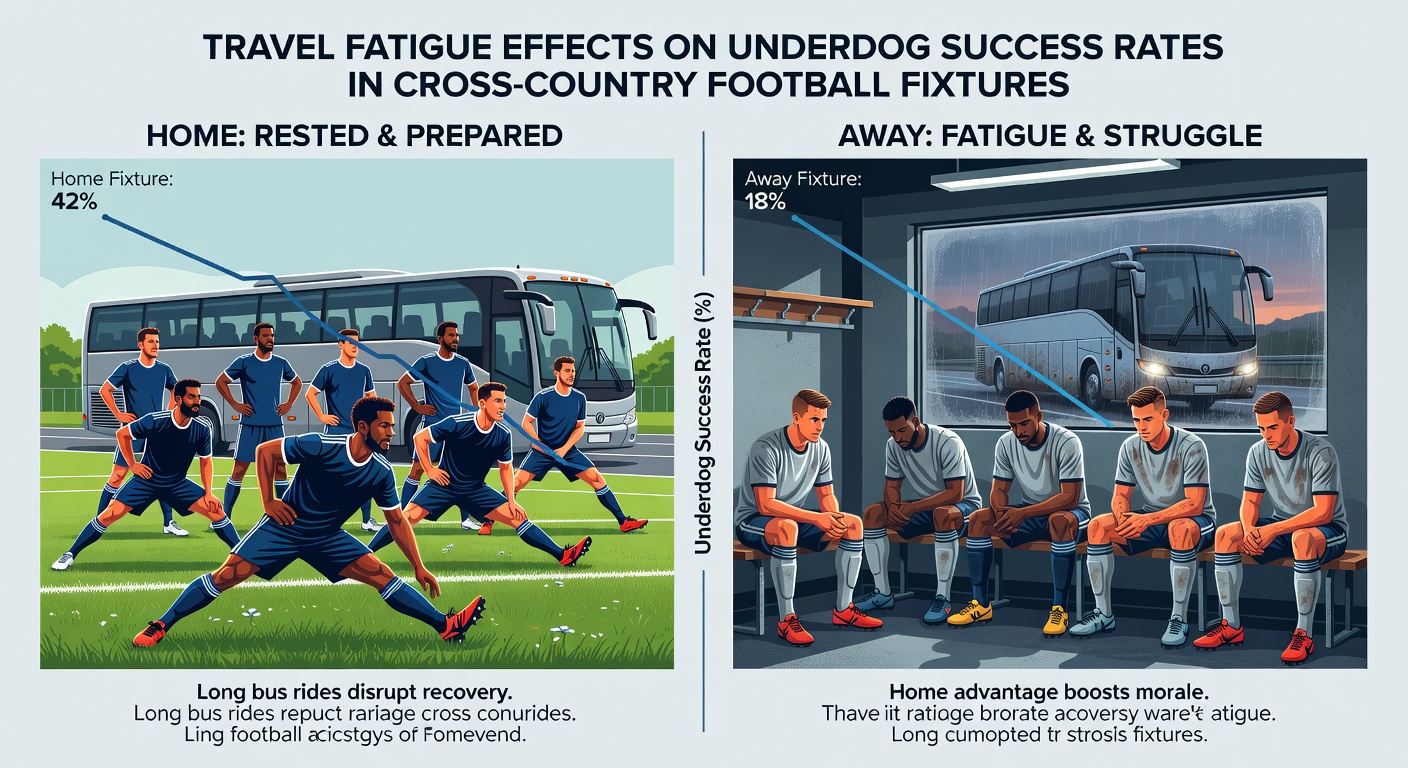
European leagues with smaller landmasses show attenuated effects, yet even there, cross-country derbies within single nations produce detectable dips when combined with European midweek obligations. A 2025 report issued by the International Society of Sports Nutrition highlighted that carbohydrate and hydration strategies mitigate some fatigue markers, although psychological components such as disrupted sleep patterns persist regardless of nutritional interventions.
Underdog-Specific Patterns
Success rates for underdogs do not follow a uniform trajectory. Certain sides demonstrate resilience when travel coincides with favorable weather or opponent rest disadvantages, while others suffer consistent shortfalls in expected goal differentials. Statistical models built from match event data reveal that set-piece efficiency often remains stable, whereas open-play chance creation declines more sharply for traveling underdogs after long journeys. This divergence suggests that tactical adjustments focused on compact defending and opportunistic transitions can partially counteract physical limitations.
June 2026 fixtures offered additional insight when several leagues resumed after international breaks. Teams returning from distant national-team camps faced compounded recovery demands, and lower-ranked clubs recorded a measurable uptick in points earned at home against similarly fatigued visitors. Analysts tracking these trends emphasize that squad rotation policies and youth integration play larger roles than travel alone, yet distance remains a consistent variable in regression analyses.
External Factors and Mitigation Strategies
Environmental elements interact with travel fatigue in ways that complicate direct causation claims. Altitude changes, temperature swings, and humidity levels encountered upon arrival can magnify or mask underlying tiredness. Training-ground studies performed by university sports departments indicate that pre-acclimatization camps, when feasible, produce modest gains in subsequent match readiness for underdog squads.
Technological aids now assist planning departments. Wearable devices supply real-time sleep and load data that coaching teams review during transit, allowing individualized recovery prescriptions upon landing. Federations in several countries have begun publishing aggregated anonymized datasets that clubs consult when constructing season schedules, aiming to distribute travel burdens more evenly across the table.
Conclusion
Cross-country travel exerts a documented influence on underdog success rates in football fixtures, with effects most visible when recovery time contracts and squad resources remain limited. Patterns observed across multiple leagues and seasons underscore the value of schedule design that accounts for geographic realities, while targeted recovery protocols offer partial countermeasures. Continued collection of performance and biometric data will refine understanding of how these variables interact over future campaigns.