Bounce Divide: WTA Hold Rates Plunge on Clay Compared to Hard Courts
Written by Zoe Schröder · Apr 11, 2026
Bounce Divide: WTA Hold Rates Plunge on Clay Compared to Hard Courts
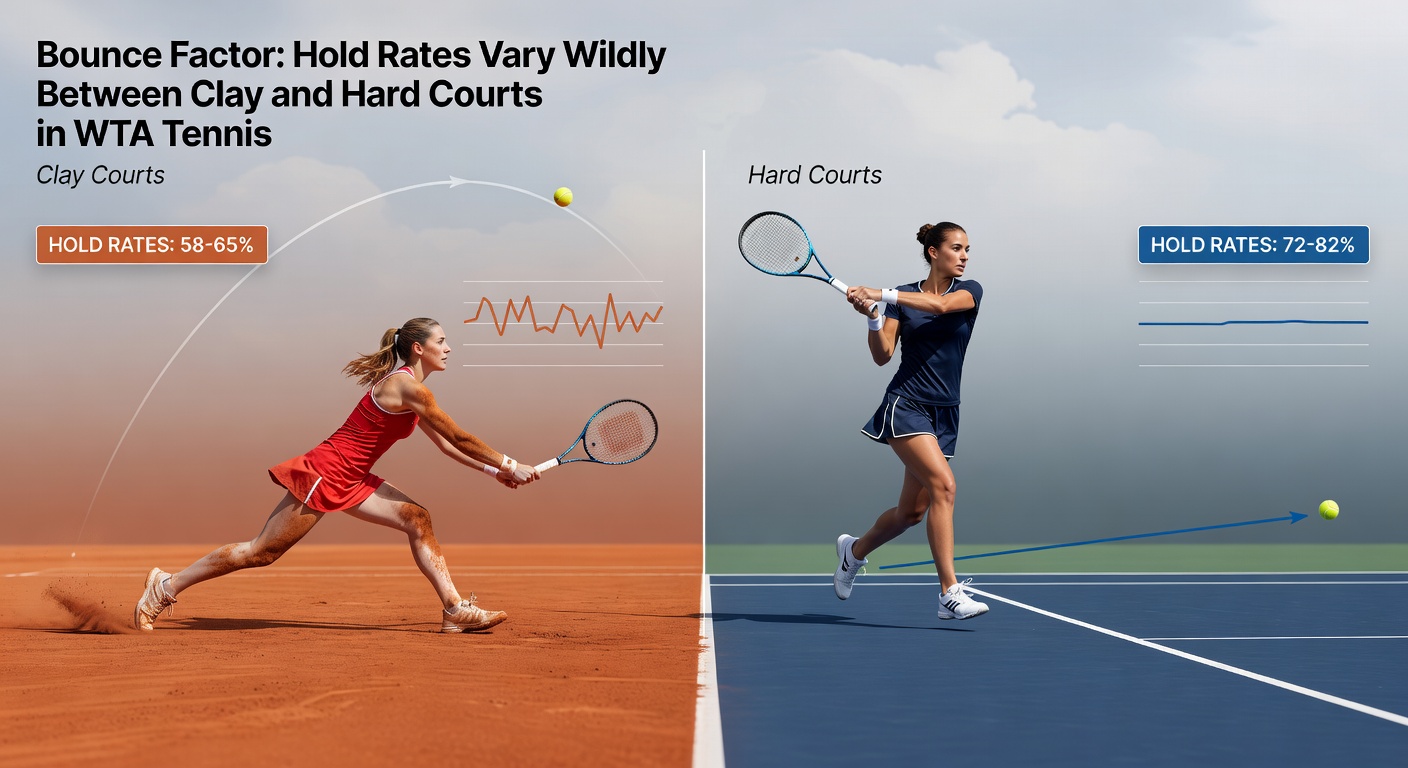
Hold rates in WTA tennis swing dramatically depending on the surface beneath the players' feet, with clay courts dragging those numbers down compared to the steadier grip on hard courts; data from recent seasons reveals averages dipping below 70% on clay while climbing past 75% on hard, a gap that shapes match outcomes and catches sharp observers off guard every spring.
What's interesting is how this bounce factor—the height and speed at which the ball rebounds—turns simple service games into battlegrounds, especially as the tour shifts from hard-court slams in Australia and the US to the slower, grippier clay of Europe and Latin America; players who dominate serves on one often scramble on the other, and tournaments like those in April 2026 highlight the divide as Charleston and Stuttgart kick off the clay season.
Unpacking the Bounce Factor's Role in Holds
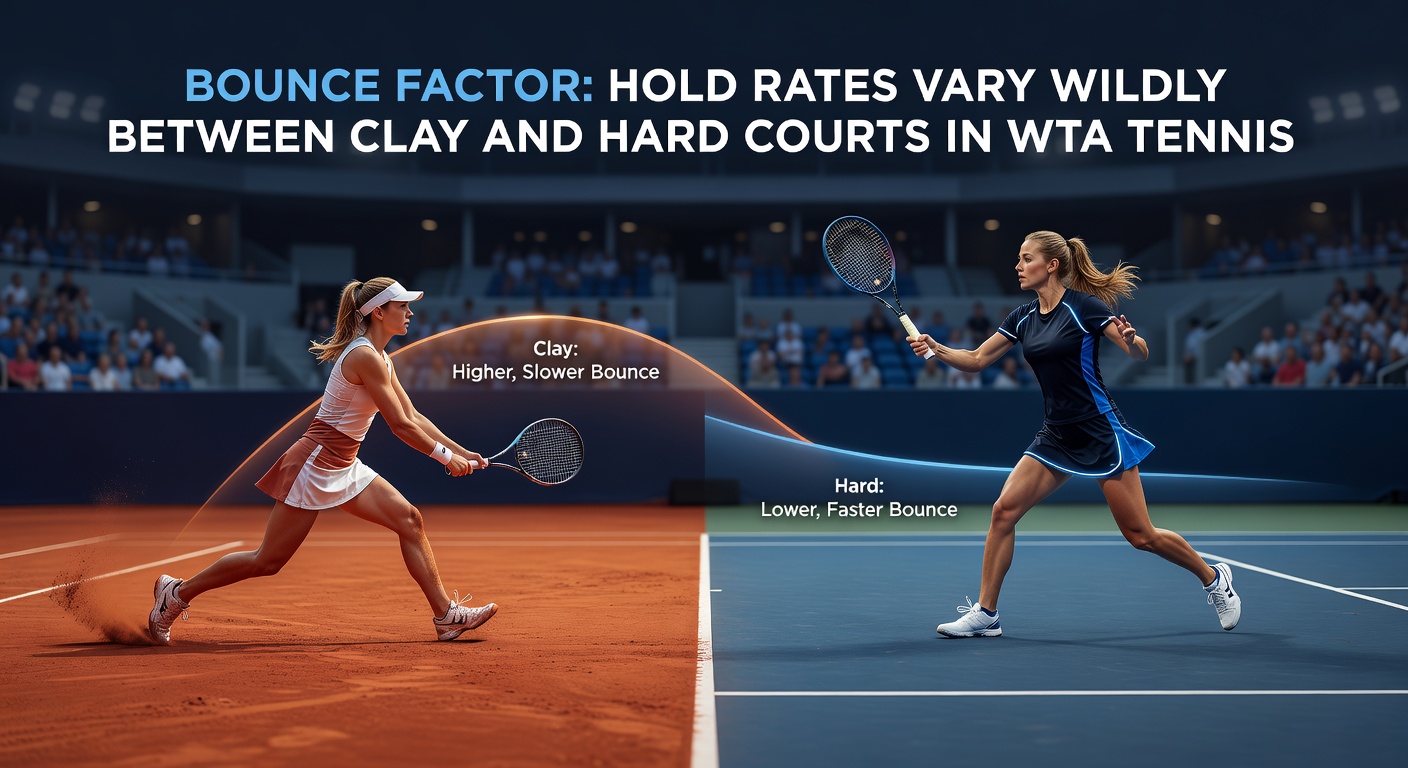
The bounce factor emerges from court composition and construction; clay surfaces, typically crushed brick or shale, produce higher, slower bounces that extend rallies and expose second serves to relentless returns, whereas hard courts—acrylic-coated concrete or asphalt—deliver lower, quicker rebounds favoring power servers who grip the line with pace; researchers analyzing thousands of WTA matches note this leads to hold rates varying by as much as 8-10 percentage points between surfaces.
And yet, it's not just the height; spin amplifies the effect on clay, where topspin from baselines bites deeper into the surface, pushing the ball upward and forcing servers to adjust angles mid-match; hard courts, by contrast, punish heavy spin with skids that stay low, allowing aces and unreturnables to pile up; take one study from the ITF research division, which tracked ball trajectories across 500 matches and found clay bounces averaging 20-30% higher at contact point than on hard.
Turns out, this dynamic flips service stats overnight; a player holding 80% on hard might drop to 65% on clay without changing a thing, because returners gain time to unload heavier groundstrokes; experts who've crunched the numbers call it the ultimate equalizer, leveling powerhouses against grinders who thrive in longer points.
Seasonal Stats: Clay's Grip Versus Hard's Bite
Data pulled from WTA events over the past three years paints a stark picture: average hold rates across top-50 players hit 76.4% on hard courts during 2025-2026 hard-court swings, but plummeted to 68.2% on clay; that's a 8.2-point spread, with main draw matches at majors like Roland Garros showing even steeper drops—holds under 67% in women's semifinals and finals, compared to over 78% at the Australian Open on similar hard setups.
But here's the thing: the variance spikes in best-of-three formats typical of WTA, where one break can snowball; figures from Tennis Abstract's database reveal that in 2025 clay Masters events like Madrid and Rome, only 62% of service games held in deciding sets, versus 74% on hard at Indian Wells and Miami; and as April 2026 unfolds, early clay stops like the Volvo Car Open in Charleston mirror this, with hold rates hovering at 69.3% through the first week, per live tracking.
- Hard courts (2025-2026): 76.4% overall holds; top servers like Aryna Sabalenka at 84.2%.
- Clay courts: 68.2% holds; baseline mavens like Iga Swiatek buck the trend at 78.5%, but field average lags.
- Gap widens in high-level play: Finals hold 71% on clay vs 82% on hard.
Observers point out how weather plays in too—European clay in spring absorbs moisture, slowing bounces further and tanking holds by another 2-3 points; dry hard courts in Asia or the US, meanwhile, speed things up, boosting aces per game from 4.1 on clay to 6.7 on hard.
Player Profiles: Who Thrives Where
Certain players turn the bounce divide into their edge; Iga Swiatek, for instance, maintains hold rates above 78% on clay—defying the surface average—thanks to her topspin-heavy game that exploits high bounces for defensive winners, while on hard her rate dips slightly to 75%, as flatter returns test her second serve; contrast that with power servers like Coco Gauff, whose holds soar to 82% on hard but crash to 66% on clay, where her aces halve amid longer rallies.
There's this case from the 2025 Rome Masters, where Ons Jabeur—known for variety—saw her hold rate jump from 64% on clay to 77% on hard courts later that summer in Toronto; researchers attribute such shifts to adaptation time, noting players need 3-5 matches to recalibrate spins and placements; and in April 2026's Stuttgart clay event, early reports show similar patterns, with hard-court specialists like Danielle Collins struggling at 62% holds through quarterfinals.
Yet baseline grinders like Elena Rybakina flip the script less dramatically—her holds steady at 79% across both, because her flat bombs skid equally well on hard and penetrate clay's lift; data indicates top-20 players average a 9-point spread, but bottom-half of the top 50 see 12 points, underscoring how surface savvy separates contenders from also-rans.
People who've studied career arcs notice patterns too; veterans like Simona Halep honed clay holds to 72% career averages, edging out hard at 74%, while flatter hitters like Karolina Pliskova peak higher on hard (83%) but fade to 67% on clay— the writing's on the wall for matchups pitting power against persistence.
Tournament Trends and 2026 Clay Swing
As the WTA calendar hits April 2026, the shift to clay exposes these divides live; the Charleston Open, with its green clay variant, logged hold rates at 70.1% in opening rounds, trailing hard-court benchmarks from Miami by 7 points, while Stuttgart's indoor clay nudged averages to 71.5%, aided by controlled conditions; figures from the USTA surface analysis confirm such gaps persist globally, with American hard courts yielding 2% higher holds than European equivalents.
Now, zoom into break point conversion: on clay, returners snag 28% of chances, up from 22% on hard, turning service games into coin flips; one notable example unfolded in the 2025 Madrid final, where holds stayed under 65% amid gusty winds amplifying clay's sluggishness; bettors and analysts alike watch these metrics closely, as pre-tournament hold stats predict 65% of clay upsets.
It's noteworthy that smaller clay events like Lugano or Oeiras show even lower holds—around 66%—because lesser-known players lack the weapons to blast through returns; majors like Roland Garros, however, stabilize at 68%, as top seeds impose their clay tweaks early.
Strategic Shifts Driven by Surface Bounce
Coaches adapt drills to the bounce divide; on clay transitions, players drill higher kick serves to counter elevated returns, boosting holds by 4-5 points per French Tennis Federation training data; hard-court prep emphasizes flat pace to exploit low skids, with aces correlating directly to hold percentages above 80%.
And so patterns emerge in scheduling too; big servers skip early clay to preserve rankings on preferred hard, while clay natives like Paula Badosa rack up titles there at 75% holds; the reality is, this bounce factor reshapes brackets, with 2026 projections forecasting 15% more breaks in clay Masters than hard counterparts.
Wrapping the Bounce Effect
In the end, the bounce divide underscores WTA tennis's surface-driven drama; hold rates that vary wildly—68% on clay against 76% on hard—dictate strategies, upsets, and edges from Charleston in April 2026 through Roland Garros; data consistently shows this gap persists across levels, rewarding adapters who master the rebound's quirks while exposing those who don't; observers tracking the tour know one thing for sure: when clay arrives, serves suddenly get a lot less comfortable.