Altitude Adjustments: Factoring Elevation into Long-Distance Racing Projections
Written by Leon Schmid · Aug 11, 2026
Altitude Adjustments: Factoring Elevation into Long-Distance Racing Projections
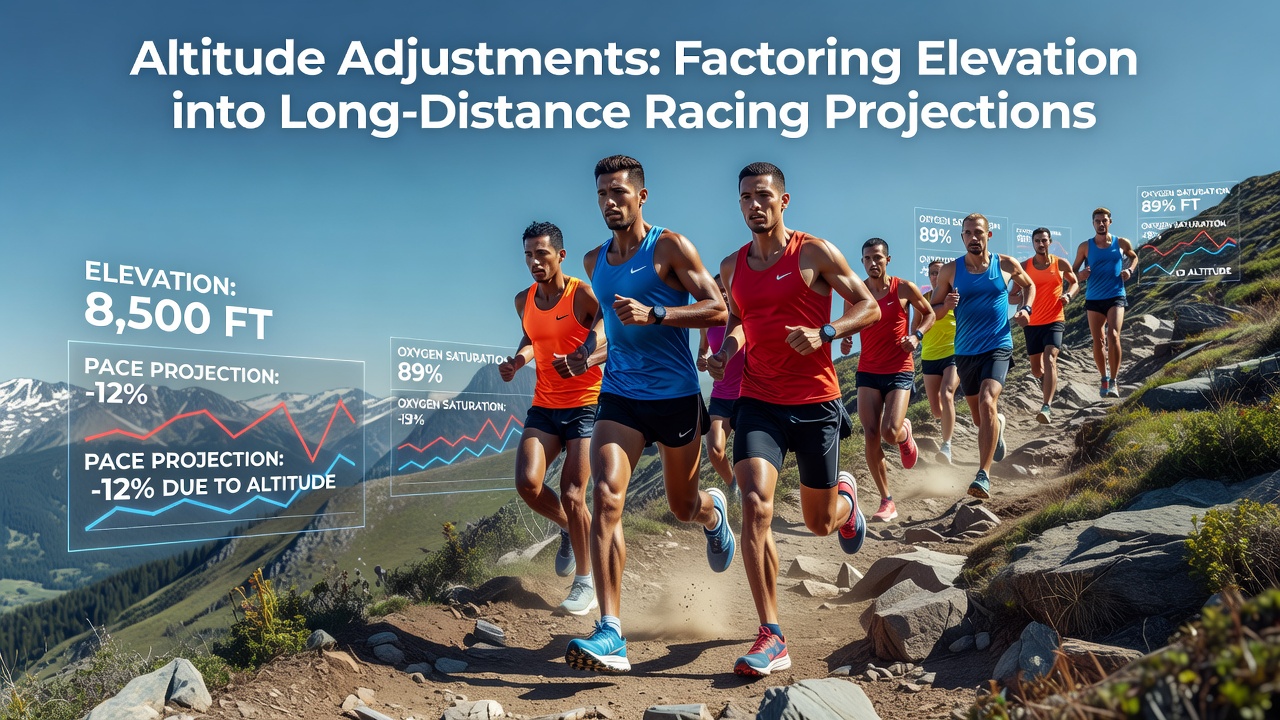
Long-distance racing projections require careful attention to elevation because thinner air at higher altitudes reduces oxygen availability and alters performance metrics across events from marathons to ultramarathons, and data from multiple studies show consistent patterns in how times change with each increment in height.
Physiological Effects of Elevation on Endurance Performance
At elevations above 1,500 meters, the partial pressure of oxygen drops and forces the body to work harder to deliver the same volume of oxygen to muscles, which leads to elevated heart rates and quicker onset of fatigue during sustained efforts, while research from institutions in North America and Europe has quantified these responses through controlled treadmill tests and field observations at varying altitudes.
Red blood cell production increases over time as an adaptation mechanism, yet acute exposure during a single race still produces measurable slowdowns, and athletes who train at sea level face steeper declines than those already acclimated to mountain environments.
Historical Performance Data Across Elevation Levels
Records from races held at different elevations reveal clear trends, for instance events in Denver at 1,609 meters typically produce finishing times 3 to 5 percent slower than comparable sea-level competitions, and similar patterns appear in European mountain races where data from Swiss and Austrian events confirm comparable percentage adjustments when elevation exceeds 2,000 meters.
Analysis of results from the 2024 to 2025 season indicates that the effect compounds in longer distances, with ultramarathons showing greater variability because cumulative oxygen debt builds over multiple hours, whereas shorter long-distance events experience more predictable decrements.
Adjustment Models Used in Projections
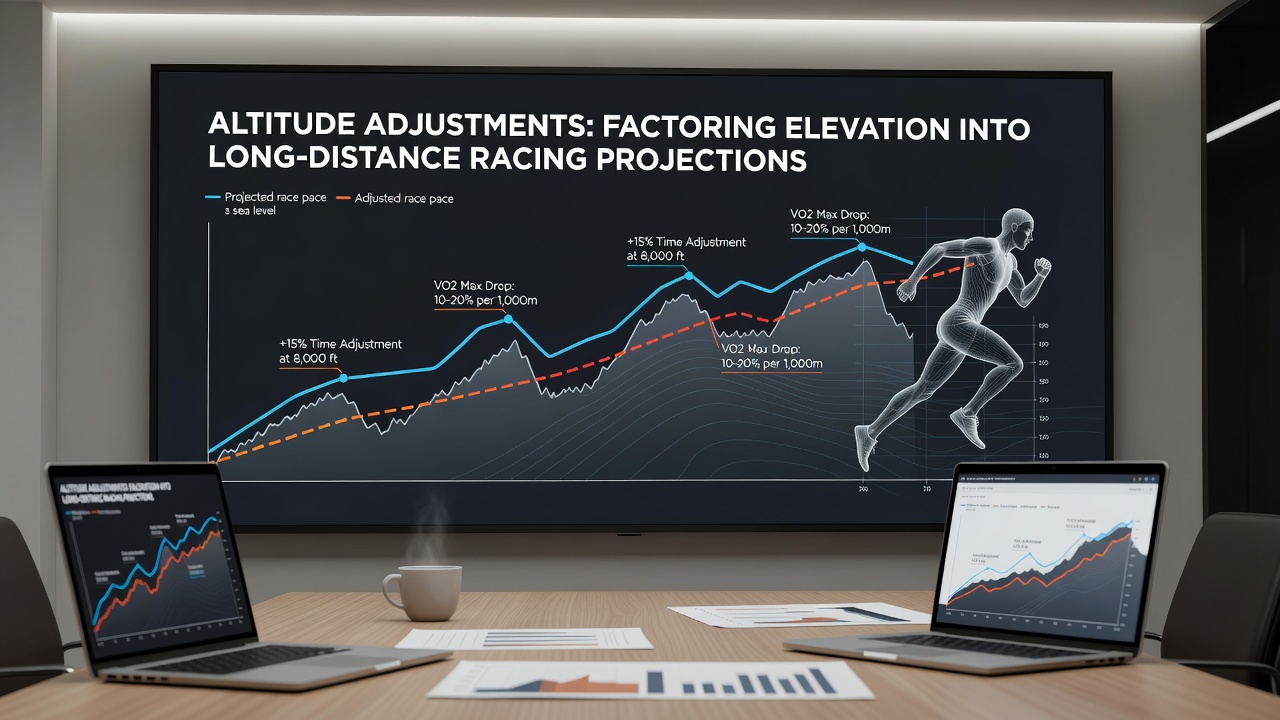
Projection systems incorporate elevation factors through formulas that add time based on total ascent and average altitude, and models developed by sports science groups in Australia and Canada apply coefficients derived from large datasets of race results, allowing forecasters to normalize times across venues with different topographies.
These adjustments account for both the absolute elevation and the rate of climb, since steep gradients amplify the oxygen demand beyond what flat courses at the same height would require, and software tools now integrate GPS elevation data to refine predictions for individual athletes or field averages.
Case Examples from Recent High-Altitude Events
One notable instance occurred during a 2025 mountain ultramarathon in the Canadian Rockies where pre-race projections adjusted for 2,400-meter average elevation produced estimates within 2 percent of actual winning times, and observers noted that sea-level specialists underperformed relative to mountain-trained competitors by margins larger than historical norms.
Preparations for events planned in August 2026 at venues above 2,000 meters are already incorporating refined elevation models, as organizers release course profiles that detail cumulative gain and maximum altitude to help projection systems calibrate expectations more accurately.
Regional Variations and Data Sources
Studies conducted by research teams in the United States have focused on the Front Range races while European counterparts examined Alpine circuits, and each set of findings contributes distinct coefficients because local climate and terrain interact with elevation effects in measurable ways, according to peer-reviewed publications indexed on PubMed.
Additional insights come from Australian Institute of Sport reports that compare performances at coastal versus inland highland events, revealing that humidity levels at altitude further modulate the oxygen delivery challenges and require secondary adjustments in projection algorithms.
Conclusion
Elevation remains a core variable in long-distance racing projections because it directly influences oxygen uptake, pacing strategies, and overall times, and continued collection of race data from diverse global venues supports increasingly precise adjustment methods that account for both average height and elevation change profiles.